Layering Performance and Natural Fabrics: Making Rooms Feel Soft, Luxurious, and Livable
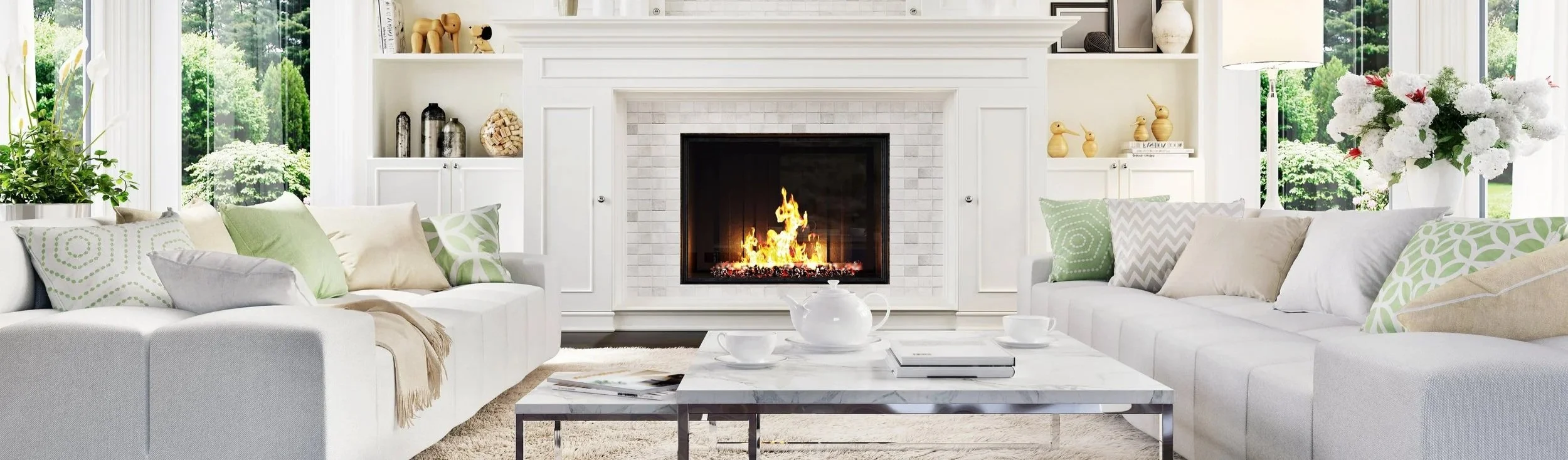
It’s easy to think of textiles as an either/or choice: performance or natural, hard-wearing or luxurious. In real rooms, the magic usually lives in the mix. For example, a simple living room palette, layered with soft neutrals, cozy weaves, and smooth surfaces—this is where performance fabrics and natural fibers work together to make a room feel both livable and luxurious. In this post, I’m breaking down how I like to layer performance fabrics with natural fibers—on sofas, chairs, windows, and soft goods—so spaces feel both resilient and deeply inviting for those using them every day.
Why this isn’t a performance vs. natural battle
We’ve all seen the “performance vs. natural” comparison chart. It’s useful for understanding durability, cleanability, and how textiles behave. But in actual homes and businesses, the rooms that feel the best rarely pick one side and stay there.
Instead, they do this:
Use performance fabrics where spills, paws, and daily wear are inevitable.
Use natural fibers where human touch, coziness, and breathability really matter.
Allow the two to mingle in a way that feels intentional, not random.
Think of performance fabrics as the anchors—the pieces that get the most friction and abuse—and natural fabrics as the soft edges that make a space feel human, not bulletproof.
Where performance shines (and what it frees you to do)
Performance fabrics have become incredibly helpful for:
Everyday sofas and sectionals.
Family or communal chairs.
Dining benches, bar stools, and banquettes.
Kid and pet hangout zones.
High-traffic entry benches and ottomans.
When you know these surfaces can handle:
Regular sitting, sliding, and lounging.
The occasional spill or shoe on the cushion.
Repeated cleaning without immediately looking tired.
…you’re freed up to:
Add natural-fiber throws and pillows without worrying if they’re “strong enough” for the base layer they’re sitting on.
Choose slightly lighter or more nuanced colors for those natural accents, because the brunt of the wear is happening on a sturdier foundation.
Focus natural fibers where skin makes the most contact, or where a little softness goes a long way.
Performance doesn’t have to be the whole story—it just needs to do its job in the right places so everything else can be more relaxed.
Where natural fibers bring the room back to life
Natural fibers—linen, cotton, wool, blends—still play an irreplaceable role:
At the body: sheets, pillowcases, throws, seat cushions where bare skin meets fabric.
At the senses: the sound of a linen curtain moving, the weight of a wool throw, the rumple of cotton after an afternoon nap.
At the eye: subtle slubs in linen, small variations in weave, the way certain dyes sit softly in natural fibers.
They contribute:
Breathability: Especially in bedding and throws.
Texture: The “realness” that keeps rooms from feeling too slick or synthetic.
Patina: The way certain natural fibers soften, crease, and gently age is often part of their charm.
Layered with performance pieces, they shift the room from “practical” to personal.
The mix: a few simple “recipes”
Here are a few combinations I often come back to when I’m layering performance and natural textiles. They’re meant as gentle frameworks, not rigid rules.
1. The hard-working sofa
Base: Performance upholstery on the sofa or sectional.
Layer: Natural-fiber throw (cotton, linen, or a cotton/wool blend) over one arm or back.
Accent: A mix of pillows—some in performance fabric, some in natural linen or cotton.
How it feels:
The piece that gets the most use is protected.
Those using the space still feel softness, texture, and subtle variation.
If a natural pillow or throw is damaged over time, it’s easier to replace than an entire sofa.
2. The inviting dining bench
Base: Performance fabric on the dining bench or banquette seat.
Layer: Natural linen or cotton cushions or small back pillows.
Optional: A washable cotton or linen seat pad that can be removed and cleaned more often.
How it feels:
Spills and crumbs are mostly handled by the performance layer.
Backs and shoulders meet softer, more breathable textiles.
The bench feels more like a place to linger, not just a perch.
3. The bedroom that feels like a room, not a showroom
Base: Performance fabric on the headboard (especially for readers and loungers).
Layer: Natural sheets and pillowcases (cotton, linen).
Accent: A wool or cotton blend throw at the foot, or linen bed pillows with patterned covers.
How it feels:
The headboard can handle hair products, oils, and occasional bumps.
The bed itself feels soft, breathable, and welcoming.
Natural layers bring nuance and warmth, so the performance pieces don’t feel too stiff.
Letting texture and color tie it all together
One of my favorite ways to make a pattern-rich room feel finished is to add solid fabrics with real texture. Instead of competing with the wallpaper or a patterned textile, these solids quietly echo a hero color or pull out one of the subtler shades hiding in the print. A nubby boucle, a soft linen, or a brushed cotton in one of those tones gives the eye a place to rest while still feeling connected to the story on the walls. It’s often the difference between a room that feels a bit flat and one that feels tactile, layered, and complete.
When you’re mixing performance and natural fibers, you can:
Let performance solids carry the hero color in the room.
Use natural solids to elevate those softer supporting colors in the wallpaper or patterned textiles.
Choose textures so the mix feels intentional: a smoother performance fabric with a slubby linen, a tight performance weave with a brushed cotton, a sturdy performance velvet with a lighter, natural throw.
It’s less about “matching” and more about letting color and texture quietly agree.
A few gentle guardrails
Because this isn’t a prescription, here are some loose guardrails rather than hard rules:
Put performance where stress lives. Seats, backs, arms, kid zones, communal pieces, and high-traffic spots are often good candidates.
Put naturals where comfort lives. Bedding, throws, certain cushions, and surfaces meant for bare skin or real lounging.
Mix within the same color story. Let your palette do the unifying: performance and natural fabrics in similar tones will feel like they belong to the same family.
Mind the hand (the way a fabric feels). If a performance fabric feels a little cool or firm, temper it with a natural-fiber throw or pillow that feels soft or fuzzy. If a natural fabric is very crisp, pair it with something more plush or substantial.
Don’t chase perfection. Rooms feel more human when there’s a little variety. A slightly rumpled linen throw on a performance sofa often signals, “You can live here,” in a way a perfectly smoothed-out scene never will.
How this helps those using the space
Most people don’t walk into a room and say, “Ah yes, I see we have a clever mix of performance and natural fiber textiles.”
They say things like:
“This feels so comfortable.”
“I’m not worried about my kids or pets being here.”
“I love how soft this is.”
“I could stay in this corner for hours.”
Layering performance and natural fabrics thoughtfully is one of the quiet ways we get there.
Comfort without panic. Those using the space can actually sit, eat, read, nap, and live without feeling like they’re tiptoeing around the upholstery.
Softness without fragility. Natural fibers bring all the tactile delight without being asked to carry all the wear.
Longevity without sterility. Performance handles the heavy lifting, natural fibers add the warmth and nuance, and together they allow rooms to age gently instead of all at once.
If you’re an interior decorator or designer and want a textile-focused partner to support your pattern-rich, layered projects, I’d love to collaborate on wallpaper, fabric, and the soft elements that make rooms feel both resilient and deeply inviting.
If you’re reading this as someone planning a new space—or reimagining an existing home or business—and you’d like help building a wallpaper and fabric story that balances performance, natural fibers, and real-life comfort for those using the space, you’re welcome to reach out through my Contact Me page to learn more about my paid interior decorating services.
And if this kind of conversation is helpful, you can also:
Subscribe to Surface & Space to have new posts land in your inbox on Fridays.
Get access to a growing library of subscriber-only resources—gentle guides, checklists, and tools to help you think through pattern, color, and materials in your own time. I add to this collection regularly, so it becomes a little toolbox you can return to whenever you’re ready.
© 2025-2026 Gabrielle Hewson. All rights reserved. You’re welcome to share links to this article, but please don’t copy or republish the text or images without my written permission. For licensing, permissions, or any other use beyond linking, please contact me directly.