Why Wallpaper & Fabric Pattern Designers Do What Mass Retailers Can’t
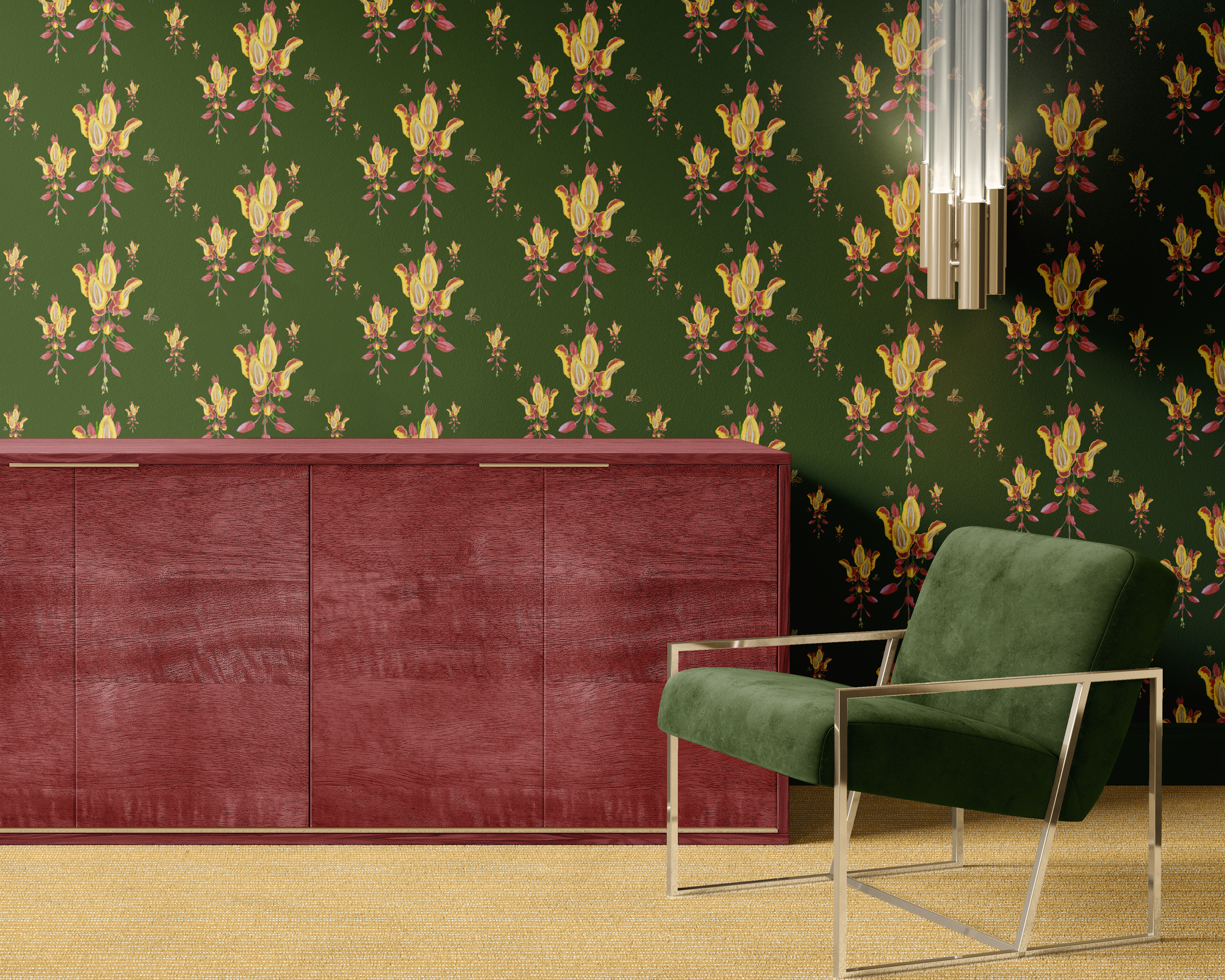
Mass retailers make it easy to grab something “good enough” at 11 p.m. with a credit card. But for decorators and designers shaping spaces that need to work hard, feel personal, and hold up over time, “good enough” rarely is. In this post, I’m unpacking why working directly with a wallpaper and fabric pattern designer—especially one who understands interiors from the inside out—often creates better real-world results than relying on mass retail, and how that collaboration can support both your work and those using the space.
Why mass retail is tempting (and why it often comes with hidden costs)
Most interior decorators and interior designers have had some version of this experience:
Something in the room still isn’t resolved and the deadline is looming.
Someone suggests grabbing a rug, lamp, or pillow from a big-box or fast-decor site.
The box arrives, and it’s… fine. The color is almost right. The scale is almost right. The quality is almost there.
On paper, mass retail looks wonderful:
Fast shipping.
A sense of endless choice.
“Safe” price points.
The hidden costs tend to surface later:
The print feels generic in person.
The fabric doesn’t hold up to real use.
The room loses some of its specificity—it could belong to almost anyone.
Independent wallpaper and fabric pattern designers ask more questions and move more intentionally up front, and the payoff is a space that feels tailored, considered, and rooted in the particular story you’re telling. Some independent wallpaper and fabric pattern designers also work on a spectrum of options: existing collections you can specify as-is, semi-custom adaptations (such as adjusting color or scale to better fit the project), and fully custom patterns developed around a specific space or story. That kind of flexibility simply doesn’t exist with most mass retailers, where the pattern is fixed and you’re the one doing the adapting.
Wallpaper & fabric pattern designers design for those who will actually use the space
Mass retail has to design for the broadest possible audience. Wallpaper and fabric pattern designers do not.
For independent wallpaper and fabric pattern designers, pattern isn’t just “surface decoration”—it’s an art form with unique expression. Each repeat starts as a drawing, a painting, or a hand-made mark, shaped around how it will live on a wall, a window, a chair, or upholstery fabric. You’re not just buying a look; you’re commissioning an artist’s eye and sensibility to support the story of a specific space.
An independent pattern designer can:
Design with nuance—slightly unusual color combinations, hand-drawn line work, and textures that feel more human than perfectly flat prints.
Build collections that look and feel cohesive, so you can layer multiple patterns and fabrics in the same project without things feeling chaotic.
Listen to how your projects tend to work: the kinds of architecture you see, the palettes you reach for, and how those using the space want to feel.
When you work with the same wallpaper and fabric pattern designer over time, the rooms you create start to feel integrated and quietly recognizable, without ever feeling repetitive.
Better fit: pattern and substrate calibrated to real spaces
Mass retailers design primarily for the digital screen they are using AI or have in-house artist working on; wallpaper and fabric pattern designers can design for rooms.
That difference shows up in two big ways:
1. Scale that respects architecture
Independent pattern designers think about:
How a repeat will move across a stair wall, around built-ins, or through a kitchen with uppers and lowers.
How pattern will land near window casings, corners, and architectural breaks.
Whether a design will feel overwhelming, underwhelming, or just right from typical viewing distances.
When the person designing the pattern also understands how those using the space move through it, scale decisions feel less like guesswork and more like choreography.
2. Color that talks to real materials
Instead of designing purely for digital impact, a wallpaper and fabric pattern designer can tune color to:
Warm or cool cabinetry finishes.
Common stone and solid-surface tones.
Real wood floors and metals, not just trend boards.
That often means:
Softer whites that feel like plaster, paper, or linen instead of bright printer white.
Blues, greens, and neutrals that can flex alongside existing finishes without fighting them.
Saturated color where it serves the story, not just where it photographs well.
Put simply: you get a better fit between pattern and substrate—wallpaper and fabric bases chosen not only for print quality and performance, but for how they’ll live alongside everything else in the room.
The result is less time spent hunting for the one mass-market pattern that “almost works,” and more time spent refining compositions that truly belong in the space.
Collaboration instead of guesswork
Mass retailers are built for transactions. Wallpaper and fabric pattern designers build relationships.
When you work directly with an independent pattern designer, you can:
Ask, “How would you scale this for a powder room vs. a tall stair?”
Explore whether a favorite pattern is a good candidate for semi-custom adjustments—like tuning scale or color—as part of a custom or semi-custom project.
Talk through how a wallpaper or fabric will behave in a particular type of room.
You’re not shouting into a void; you’re in conversation with someone who:
Knows the patterns inside and out.
Can see what you’re trying to achieve.
Can be a second set of eyes on where the pattern starts and stops, how it flows around the room, and where important seams and transitions will land.
For busy interior decorators and interior designers juggling multiple projects, this kind of collaboration quietly saves hours—and prevents missteps that only show up on install day.
Originality that supports your aesthetic
One of the most subtle but powerful differences between mass retail and working with a wallpaper and fabric pattern designer is how each relates to your own design voice.
Mass retailers often:
Follow broad trend directions.
Release lookalikes of whatever is popular.
Make your work more likely to resemble what those using the space see in everyone else’s feed.
Independent wallpaper & fabric pattern designers tend to:
Develop a distinct visual language you can get to know and curate from.
Create patterns that aren’t circulating in hundreds of other homes or commercial spaces—and, when needed, can be developed specifically for one project and those using the space.
Shape patterns and stories that support and deepen your aesthetic instead of flattening it.
Over time, this helps your portfolio feel coherent and recognizable without being repetitive. You’re not relying on mass-market prints to fill gaps; you’re building rooms that feel like they belong to a particular mind and hand—yours, in partnership with the designer.
Better for the long game: sustainability and longevity
Working with a wallpaper and fabric pattern designer can also make it easier to design for the long game—visually, materially, and ethically.
Many independent wallpaper & fabric pattern designers:
Produce in smaller runs or on-demand, which can reduce overproduction.
Choose wallpaper and fabric bases for durability and print clarity, so pattern ages more gracefully.
Build collections intended to endure, not just “hit” for a season.
This matters when:
You want those using the space to live with these choices for years, not months.
You’re reupholstering a beloved piece rather than sending it to landfill.
You want wallpaper and fabric to feel like part of the story of the space, not a seasonal layer to swap out.
“Fewer, better” is much easier to achieve when the patterns and substrates were designed with time in mind.
How this specifically supports decorators and designers
If you’re an interiors professional, collaborating with a wallpaper and fabric pattern designer can:
Streamline decisions – You’re pulling from a focused body of work that you already trust, instead of starting from zero with every project.
Reduce overwhelm for those using the space – You can present a tightly edited set of options that all hang together, rather than a scatter of unrelated mass-market pieces.
Protect your process – You have a partner who understands sampling, lead times, phasing, and the reality of install days.
Expand your pattern vocabulary – You gain access to scales, color stories, and hand-drawn designs you might not find in mass retail catalogs.
And there’s something else:
When those using the space hear, “This wallpaper and fabric were created by a specific artist in collaboration with us,” it changes how they experience the room. It feels intentional. It feels cared for.
If you’re reading this as someone living or working in the space
You might be wondering quietly:
“Is it really worth going through a wallpaper and fabric pattern designer instead of just buying from a big retailer?”
It depends on what you want your space to do for you.
Mass retail can absolutely fill gaps and is sometimes the right choice for:
Very short-term needs.
Spaces that won’t be used intensely.
Quick, low-stakes experiments.
But if you’re:
Investing in rooms you want to feel rooted, personal, and durable,
Working with an interior decorator or interior designer you trust,
Or simply tired of seeing the exact same prints everywhere…
…then partnering with a wallpaper and fabric pattern designer gives you access to work that’s been created with more depth, more care, and more consideration for how it will live with you.
And if you’d like an ideal blend of pattern and practicality, consider hiring an interior decorator who also designs wallpaper and fabric patterns. That combination means:
The person shaping the emotional and tactile experience of the room is also the one designing or curating the patterns that carry it.
Wallpaper and fabric choices are aligned with your architecture, furnishings, and daily life—not chosen in isolation.
You gain one point of view holding both the big-picture story and the smallest details of color, scale, and substrate.
You’re not just choosing “a look.” You’re choosing how you want to feel in your own spaces—and who you want to partner with to get there.
A note from my side of the studio
As a wallpaper and fabric pattern designer, interior decorator, and someone with real-world interior design experience, I sit right at this intersection.
I design wallpaper and fabric with the realities of installation, performance, and daily life in mind.
I think like a decorator and someone who has worked inside interior design studios—considering architecture, existing furnishings, and how those using the space move through it.
I love collaborating with decorators and designers who want someone in their corner who speaks both “pattern” and “project.”
I offer both semi-custom adaptations of my existing patterns (tuning color and scale) and fully custom pattern design when a project needs something truly its own.
Put simply, it’s a bit of a trifecta:
Pattern designer — shaping the surfaces that carry the room’s visual story.
Interior decorator — curating how spaces feel and function day to day.
Interior design experience — understanding how all of that sits inside real rooms, real architecture, and real construction constraints.
That combination lets me design patterns and substrates with installation, daily life, and the emotional tone of the room all in view at the same time.
Working together, we can:
Build pattern stories that feel unique to your projects, not pulled from the same handful of mass-market sources.
Choose wallpaper and fabric substrates that fit the way each space is actually used.
Give those using the space something that feels quietly special every time they walk into the room.
If you’re an interior decorator or designer and want a textile-focused partner to support your pattern-rich projects, I’d love to collaborate on wallpaper, fabric, and the soft layers that carry the story of a space.
If you’re reading this as someone planning a new space—or reimagining an existing home or business—and you’d like help building a wallpaper and fabric story that balances texture, pattern, and practicality for those using the space, you’re welcome to reach out through my Contact Me page to learn more about my paid interior decorating services.
And if this kind of conversation is helpful, you can also:
Subscribe to Surface & Space to have new posts land in your inbox on Fridays.
Get access to a growing library of subscriber-only resources—gentle guides, checklists, and tools to help you think through pattern, color, and materials in your own time. I add to this collection regularly, so it becomes a little toolbox you can return to whenever you’re ready.