Before the Trend Name: How My Feeling Africa Collection Aligns With Afrohemian Decor
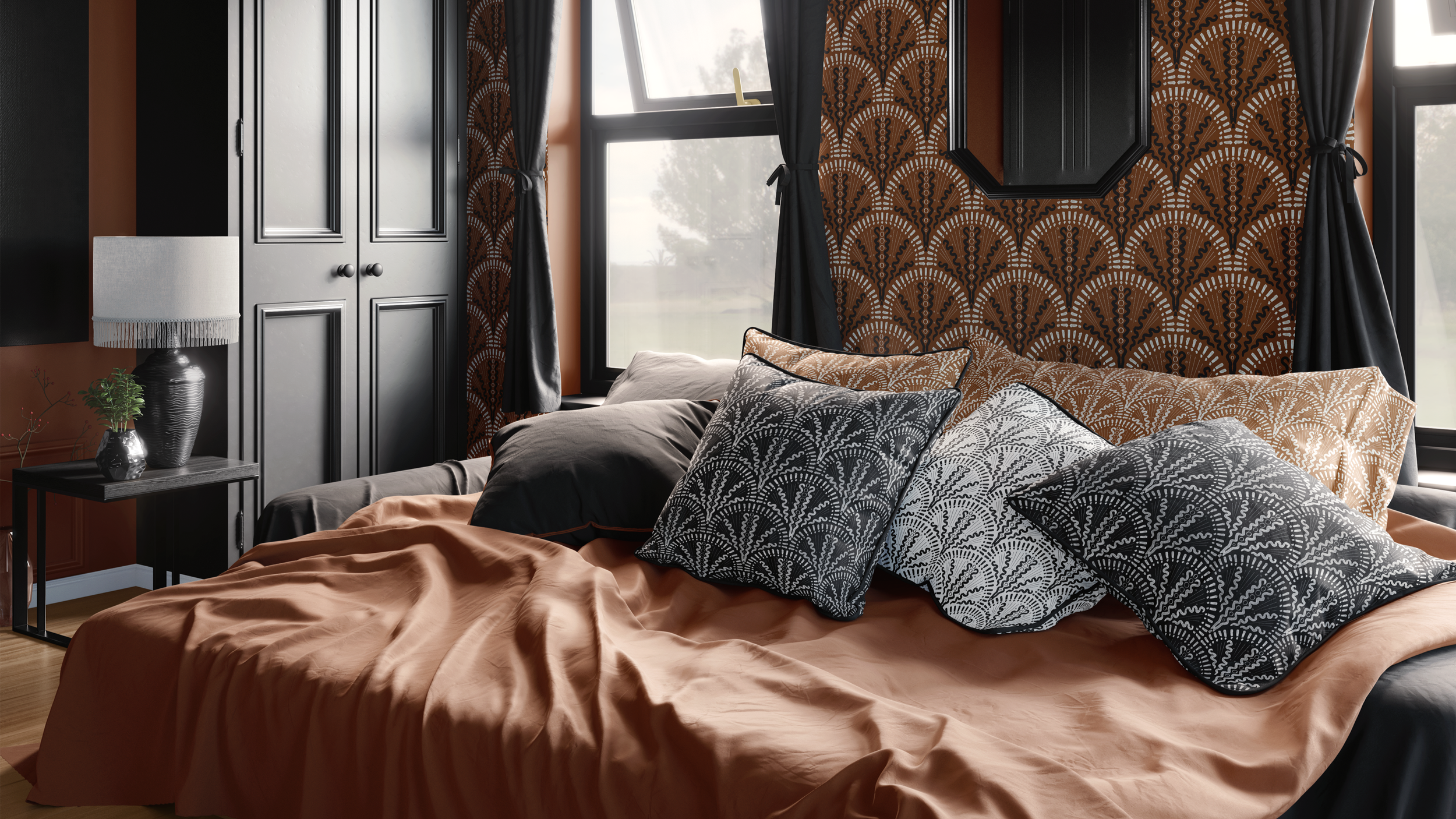
Collection: Feeling Africa; Colorways: 04 (White & Black on Brown); GH Studio Reference #19343061 (Wall) + 01 Paintbrush Scallops in Black on White; GH Studio Reference #19343057, 02 Paintbrush Scallops in White on Black; GH Studio Reference #19343058, and 05 Paintbrush Scallops in White on Brown; GH Studio Reference #19343062 (Pillows)
A reflection on where Feeling Africa and Afrohemian Decor quietly meet
Long before I saw the phrase “Afrohemian decor” in Pinterest’s 2026 Trends Report, I was already exploring this kind of layered, pattern-rich aesthetic in my Feeling Africa collection—and specifying it with clients and collaborators before it ever had a trend name attached to it.
When I finally came across the term in that report, it felt less like a new direction and more like a new *name* for a look I’ve been drawn to for a long time: joyful color, rhythmic pattern, and spaces that feel warm, collected, and full of story.
If you’re an interior designer, decorator, stylist, or showroom professional, you’ve probably felt this too—those projects where pattern, color, and story all click into place and the room feels like it really belongs to the people who live there.
In this post, I’m not claiming to be part of a movement or a spokesperson for African design. Instead, I’m sharing how this existing, evergreen collection happens to align with what’s now being called Afrohemian decor—and how I think about inspiration, respect, and collaboration within that as your potential design partner and pattern specialist.
What Is Afrohemian Decor?
At its heart, Afrohemian decor is about warmth, story, and soul.
When people use the term, they’re usually talking about interiors that blend:
Influences from the African continent and its diaspora (communities of African descent living around the world)
Relaxed, bohemian layering
A “collected over time” feeling
Think of rooms that feature:
Bold, rhythmic textiles and patterns
Woven baskets and natural fiber rugs
Handcrafted objects in clay, wood, and metal
Artwork created by artists whose work is rooted in these cultures and histories
Casual, inviting furniture that encourages people to gather and stay awhile
It’s not about perfection or matching everything; it’s about letting color, pattern, and handcrafted pieces tell a story. These are spaces that feel lived-in, loved, and personal.
When I look at Afrohemian spaces, I see:
Pattern that feels almost musical
A generous use of earth tones alongside saturated brights
A mix of vintage, handmade, and contemporary pieces
A sense that the room has a history—even if it’s still being written
That combination is exactly what drew me toward creating the Feeling Africa collection in the first place.
The Story Behind Feeling Africa
The Feeling Africa collection grew out of my love for:
Bold color that feels optimistic and alive
Geometric repetition that creates rhythm and movement
Artisan objects and interiors that celebrate craft and community
I was—and am—deeply inspired by the way African art and artisanal decor use color and pattern to express joy, identity, and connection. That inspiration flowed into my sketchbook and eventually into repeat patterns designed for walls and textiles you can confidently specify in your projects.
It feels important to name my position clearly:
For some of my more globally inspired collections, I design from outside the cultures that first inspired these aesthetics, and I’m committed to approaching them as an admirer and guest—never as a spokesperson.
I don’t share the cultural heritage that shaped the original traditions I admire. I approach them as someone who is learning, looking, and responding—working to interpret feelings and visual impressions in a way that’s respectful rather than reductive.
The name Feeling Africa is intentional. It’s less about geography on a map and more about an emotional response:
The energy of layered color
The warmth of natural materials
The sense of movement in repeated motifs
The joy of spaces that feel truly lived in
This collection is my way of translating those feelings into wallpapers and fabrics that can live comfortably within a wide range of homes and projects you design.
How Feeling Africa Fits Within an Afrohemian-Inspired Space
Although Feeling Africa wasn’t created for the Afrohemian trend, it naturally sits inside that aesthetic. The patterns are designed to be supporting players in a room full of character, not the only star of the show.
Here are a few ways I imagine these designs living in Afrohemian-inspired spaces you’re designing:
1. As a Rhythmic Backdrop for Art and Objects
A patterned wallpaper from Feeling Africa can create a layered, vibrant backdrop for:
Framed artwork by African and Afro-diasporic artists
Woven wall baskets and sculptural pieces
Collected objects from travels or local makers
The pattern adds rhythm and color, while the art and objects bring in personal and cultural specificity. Together, they tell a richer story.
2. As a Bridge Between Neutral and Bold
If you’re working on a room that is primarily built around:
Rattan, wood, and natural fiber textures
Soft neutrals, creams, and earth tones
…a Feeling Africa print used on:
A single accent wall
Drapery panels
An upholstered chair or bench
…can introduce a bolder, Afrohemian-inspired color story into a more subdued boho palette. It’s a way to introduce confidence and color without overwhelming the space.
3. In Small Spaces with Big Personality
Some of my favorite spots for Afrohemian-inspired pattern are:
Powder rooms
Entryways
Reading nooks
Built-in seating areas
These spaces are perfect for going all-in with a bolder print. A Feeling Africa wallpaper, paired with:
A woven pendant
A framed print or textile
A small stack of much-loved books
…can create a complete, story-filled moment in just a few square feet.
4. As a Connector Across Rooms
Because the collection includes multiple colorways and related motifs, you can use different Feeling Africa patterns in:
An entryway
A dining area
A bedroom or office
…to create subtle continuity. This works especially well if you’re layering in handcrafted pieces and textiles throughout your home—you get both variety and visual rhythm.
As a real-world example, one of the Feeling Africa colorways has been installed in the Concept 32 Custom Cabinet Studio showroom in Longmont, Colorado, printed on natural sisal grasscloth. The pattern spans a full-height feature wall roughly ten feet wide, positioned along the main sightline between the front entrance and the back of the showroom, creating a color-rich backdrop for a bathroom vanity vignette. After seeing several of my hero patterns, their design team chose this one to anchor that space and began imagining how it could add warmth and color to the organizational spaces they design for their residential and commercial clients. That kind of response from working designers feels like a quiet affirmation that Feeling Africa can live comfortably in the kinds of layered, character-rich interiors people are craving right now.
Inspiration, Respect, and Supporting Original Makers
Any time a look rooted in specific cultures becomes a “trend,” there are important questions to ask:
Who benefits from this visibility?
Whose stories are being told—and whose are being left out?
Are we appreciating, or are we unintentionally erasing and replacing?
When it comes to Afrohemian decor, I believe the most meaningful spaces:
Support African and Afro-diasporic artists and artisans
Honor the origins of motifs and materials
Avoid flattening many cultures into one vague “global” aesthetic
Within that, my role as a designer is very specific:
To create pattern tools—wallpapers and fabrics—that help people build spaces they love
To be transparent about where I stand in relation to my inspirations
To encourage clients and collaborators to mix my work with original art, textiles, and objects from the cultures that inspired the look in the first place
I see Feeling Africa as one layer among many in a well-considered Afrohemian-inspired space—not a substitute for authentic African textiles, art, or craft.
Looking Ahead: Trend Names Come and Go, Color and Joy Remain
Will “Afrohemian decor” still be the buzzword in a few years? Maybe, maybe not. Trend language shifts. New labels emerge. Algorithms move on.
What feels more enduring to me is the ongoing desire for:
Color that feels alive
Pattern that tells a story
Spaces that honor the people and cultures who inspire them
Homes that feel personal, not performative
That’s the space where Feeling Africa was born, and it’s where it will stay—whether or not the trend name changes, and whether or not there’s a report telling us what to call it.
Want to Explore Feeling Africa in Your Next Project?
If the Afrohemian aesthetic has caught your eye and you’re curious about how these patterns might work in your world, here are a few next steps you can take as a trade professional:
Browse the Feeling Africa wallpaper collection — Explore colorways, scale, and patterns designed for residential and small commercial interiors.
Request samples or trade memos — If you’re a designer or trade professional, I’m happy to help you see these patterns in context and in conversation with your existing finishes and palettes.
Pair patterns with interiors support — As an interior decorator, I can help you integrate Feeling Africa into a broader palette of furnishings, textiles, and finishes for a single room or a whole home or commercial space.
Stay inspired — Follow along on Pinterest and Instagram, where I’ll be sharing Afrohemian-inspired mood boards, room concepts, and styling ideas using this collection.
Whether you’re all-in on the Afrohemian look or simply drawn to its warmth and spirit, my goal is always the same: to create art that feels alive and intentional—art that transforms a room and how someone feels inside it and to be a thoughtful, reliable collaborator on the projects you bring to life.
Subscribe to Surface & Space for new articles in your inbox and instant access to two free printable substrate guides (wallpaper & fabric), plus a bonus PDF on Conscious Creators of Gentle Textiles.
© 2025 Gabrielle Hewson. All rights reserved. You’re welcome to share links to this article, but please don’t copy or republish the text or images without my written permission. For licensing, permissions, or any other use beyond linking, please contact me directly.