Designing Rooms Children Can Grow With Without Starting Over Every Few Years
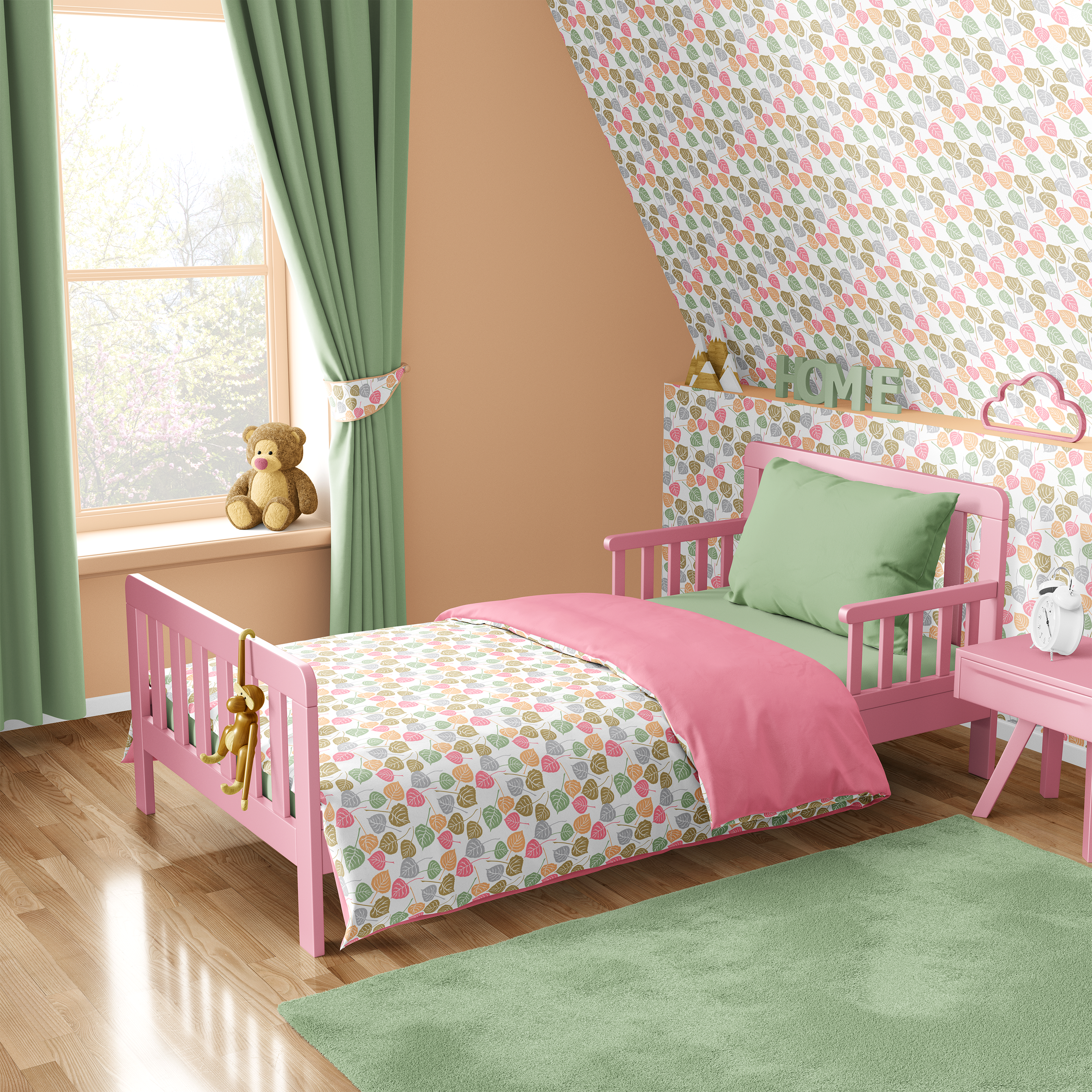
A child’s room can feel playful, layered, and deeply personal without needing to be redone every few years. Here, the wallpaper sets the room’s visual identity, while coordinated paint, bedding, and complementary fabrics pull colors from the pattern to create a space that feels cohesive now and flexible enough to evolve over time. Featured: Tumbling Aspen Leaves (BTOI-TAL-02 Peach + Sage + Gray + Taupe)
Why this matters
Children’s rooms are often designed with the best intentions and the shortest timeline. In the excitement of preparing a nursery, updating a bedroom, or creating a play space, it is very easy to build the room around what feels sweet, obvious, or of-the-moment.
And sometimes that works beautifully for a while. But what often follows is a room that feels outgrown much sooner than expected. A space that felt perfect for one stage of childhood can start to feel too young, too themed, or too narrow once the child changes—as children do, constantly.
That is one of the reasons I care so much about designing these spaces with a longer view. I do not think children’s rooms need to feel generic in order to last. Quite the opposite. I think they can feel imaginative, warm, and full of identity while still being flexible enough to grow with the child rather than needing to be stripped down and started over every few years.
A room can be age-aware without being age-limited
This is the distinction I think gets missed most often.
A room for a baby or a young child does not need to pretend that age does not matter. Of course it matters. The emotional needs of a nursery are different from those of a teenager’s room. A toddler’s room should not feel severe or overly formal.
But there is a difference between making a room feel appropriate for a child’s current stage and making every major design decision so stage-specific that the room has nowhere to go next.
That is where I think a more thoughtful approach becomes so valuable. Instead of building the room around a narrow theme, I like to think about building it around a feeling, a visual world, or a deeper point of inspiration.
That may mean: nature, movement, soft structure, whimsy without cliché, color relationships that feel uplifting, and/or pattern that feels imaginative without feeling juvenile.
Those ideas can evolve. A narrow theme usually does not.
The goal is not a bland room. It is a room with room to grow.
When people hear “designing for longevity,” they sometimes imagine a room that is toned down to the point of feeling cautious. But that is not what I mean.
I do not think a child’s room should feel stripped of delight just because it is being designed with a longer timeline in mind. Children deserve rooms that feel joyful, personal, and emotionally alive. They deserve beauty, imagination, softness, and visual story.
What I am after is not a room with less personality. It is a room with a stronger foundation.
That usually means making fewer decisions that are locked tightly to one fleeting moment, and more decisions that can keep giving something back as the room evolves.
Stable layers and flexible layers
This is one of the most useful ways I know to think about children’s rooms.
Some parts of the room should be stable. Other parts should be easier to change.
The stable layer is where I tend to place the decisions that shape the room’s deeper atmosphere:
the wallpaper
the larger color story
key upholstered elements
foundational window treatments
sometimes the rug or a major furniture piece
The flexible layer is where I like to place the pieces that can shift more easily as the child grows: bedding, pillows, art, smaller accessories, accent colors, styling details, sometimes lighting or one smaller upholstered piece.
When that balance is handled well, the room can change without being remade. The atmosphere stays intact, but the expression can keep evolving.
That is a much gentler, more beautiful way for a room to mature.
Why wallpaper can be such a strong long-term anchor
This is one of the reasons I think wallpaper can be such a smart choice in children’s spaces. A well-chosen wallpaper does not just decorate the room for one moment. It creates a visual identity that can stay relevant through multiple phases of growing up.
A pattern can feel:
soft and comforting in a nursery
curious and inspiring in early childhood
layered and personality-rich in later childhood
still beautiful and interesting years later
That kind of flexibility is incredibly useful. It means the walls can hold the room’s larger emotional story while the more easily changed elements shift over time.
And because wallpaper can bring pattern, movement, and atmosphere into the room so fully, it often allows the rest of the space to be handled with more freedom and less pressure. The room already has a point of view.
The substrate matters too, but here as part of the long-view strategy
In this article, I do not think about substrate choice mainly as a technical conversation. I think about it as part of the room’s long-term foundation.
PVC-free Type II Non-pasted is often where I begin when I want the room’s foundation to feel both durable and refined. It is usually my lead recommendation for children’s bedrooms and other spaces where I want the wallcovering to carry the room beautifully for years, while the more flexible layers evolve around it.
Traditional Non-pasted remains a strong option when I want a more paper-like character and a durable wallcovering that still makes sense for hard-working residential use. In some children’s rooms, especially playrooms or other more active family spaces, it can be exactly the right fit.
Vinyl is the one I reserve for the toughest conditions. When the room is going to ask the most of the walls over time—whether because of moisture, heavier wear, or the need for the easiest practical cleaning—it can be the smartest choice even if it is not my preferred refined look.
So for me, the question is not simply which pattern is beautiful enough to last emotionally. It is also which substrate is sensible enough to support the life the room is actually going to live.
This is where pattern choice matters so much
Not every pattern wants to age with a room, and that is okay. Some are delightfully of-the-moment. But when I am designing for longer use, I look for patterns that have enough depth and flexibility to keep giving something back over time.
That often means patterns with:
strong line quality
a sense of movement rather than gimmick
color that can support more than one age or styling direction
a feeling of story without locking the room into one literal theme
beauty that can still feel beautiful when the child is older
This is one of the reasons I often think nature-inspired patterns work so well. They can feel soothing and magical for younger children without becoming visually limiting later. They also tend to connect naturally with a broader range of furniture, textiles, and color shifts as the room changes.
Why this approach often makes more financial sense too
Even when families do not talk about it this way, redesigning a room every few years is expensive. Repainting, patching walls, replacing textiles, swapping furniture, and reworking the entire tone of the room adds up quickly.
That is one of the reasons I think it makes sense to let the more permanent elements do more of the long-term work from the beginning.
If the wallpaper has enough beauty, warmth, and staying power, and if the larger upholstered or window elements are chosen with durability and flexibility in mind, then the room can evolve through smaller changes rather than full overhauls.
That may look like: changing bedding, changing pillow combinations, updating artwork, introducing different accent colors, shifting out a playful lamp or accessory for something more mature, and/or replacing one upholstered piece rather than redesigning the whole room.
That is a much gentler and smarter evolution.
Timing matters when ordering wallpaper
Because wallpaper is a printed material, I always recommend sampling reasonably close to the final purchase and then ordering within a week or two once the decision is made.
That timing helps protect the room’s larger design story. Printing equipment is recalibrated regularly, so dye lots can vary between the sample in hand and the rolls that ship later. Ordering promptly makes it more likely that the wallpaper you receive will stay closely aligned with the sample you used to build the rest of the room around.
If a family is investing in a room they hope will last beautifully for years, it makes sense to protect that decision from avoidable variation right from the start.
Wall prep matters too
This is another part of the long-view conversation. Wallpaper wants a well-prepared wall. And although stronger wallpaper substrates can be more forgiving than delicate papers, I still recommend the smoothest wall possible.
Smoother walls generally support better adhesion, a cleaner finish, and easier future removal. That matters in a forever home where the goal may be to let the room carry beautifully for years and then update it cleanly when the child is finally old enough to ask for something new.
So this is not really a shortcut argument. It is a quality argument. Better prep tends to support a better and longer-lasting result.
Performance fabrics belong in this conversation too
Because I work across both wallpaper and fabric, I can help create rooms where the wallcovering, bedding, drapery, and other soft elements feel intentionally connected from the beginning rather than pieced together afterward.
If the goal is to create a room that can grow beautifully rather than be restarted from scratch, then wallpaper cannot be the only long-view decision. The fabrics matter too.
Children’s spaces often include: an upholstered chair, a bench, Roman shades or drapery panels, pillows, a headboard, bedding accents, and/or sometimes a small sofa, reading nook, or window seat.
Those are all opportunities to make choices that feel beautiful now and still useful later.
Performance fabrics are especially helpful here because they allow softness, comfort, and everyday practicality to coexist. They help the room stay more livable through the years when spills, friction, climbing, collapsing, and all the rest are part of the daily picture.
And because fabrics are often easier to update than walls, they can act as the room’s more flexible layer. The wallpaper can hold the larger emotional atmosphere while the textiles help fine-tune the room as the child grows.
That is a much more sustainable and design-smart way to build the space.
A room can still feel fun without being disposable
I think this is important to say clearly. Designing for longevity does not mean designing a room that feels serious, flat, or stripped of personality.
Children deserve rooms that feel delightful. They deserve color, visual joy, and imagination. They deserve spaces that spark curiosity and make daily life feel a little more beautiful.
But delight does not have to mean novelty. And novelty is not the only path to a room that feels magical.
Sometimes the most successful children’s rooms are the ones that feel rich in atmosphere rather than overloaded with literal references. A room can feel soft, adventurous, botanical, playful, bright, or full of wonder without being built around something that will feel visibly outgrown in a short time.
What this can look like in real life
A nursery with a wallpaper that feels serene and nature-led, paired with a performance fabric chair and soft bedding that can be updated later without disturbing the room’s core identity.
A child’s bedroom where the wallpaper carries the room’s sense of pattern and personality, while bedding, pillows, and art do more of the age-specific talking over time.
A playroom or bedroom where the wallcovering provides a stable visual foundation, while the softer pieces bring warmth, comfort, and flexibility as the child grows.
A shared sibling room where the wallpaper gives the space a cohesive framework, allowing each child’s evolving personality to come through in smaller, more changeable ways.
These are the kinds of rooms that feel designed to live with a family rather than simply styled for one moment in time.
For decorators and designers: how to present this well
If you are guiding family projects, I think this is a very helpful reframing to offer.
Instead of asking only what feels right for the child right now, you can ask:
What will still feel beautiful and useful in five years?
Which parts of the room should be the stable layer, and which parts should be easier to change?
How can we create joy and personality without locking the room into a short shelf life?
Which substrate best matches how hard this room is actually going to be used?
Wallpaper and performance fabrics together give you a strong answer. They allow you to build a room with emotional richness and practical longevity at the same time.
That is a much more valuable proposition than simply making the room look age-appropriate this season.
For families: what to ask yourself
If you are shaping a child’s room of your own, I would encourage you to think beyond what feels cute in the moment and ask:
Will this still feel beautiful when the child is older?
Does the room have enough identity without relying on a narrow theme?
Could I update this room through textiles and styling instead of starting over completely?
Which substrate best suits how hard this room is really going to be used?
Do I want the room to feel temporary, or to feel like part of the home’s larger story?
What choice feels strongest not just for now, but for the years we hope to live with this room?
You do not need to design a child’s room as if the child were already grown. But you also do not need to design a room that becomes visually disposable almost immediately.
There is a middle ground, and it is often the most beautiful one.
The best children’s rooms evolve instead of expire
That is really the heart of it.
A good children’s room does not need to be frozen in one stage of life. It can stretch. It can deepen. It can stay supportive while the person using it changes.
That is one of the reasons I think the most successful rooms begin with stronger foundations:
walls that can hold the room for years
fabrics that can stand up to daily life
a pattern story that feels personal rather than generic
a layered approach that allows change without demanding reinvention
That kind of room is not less creative. It is more thoughtful. And in the long run, it is often more beautiful too.
If you’re an interior decorator or interior designer and want a pattern-focused partner to help you create children’s spaces that can evolve beautifully over time, I’d love to collaborate.
If you’re reading this as someone shaping your own home and want a child’s room that feels joyful now and still beautifully relevant later, you can contact me to engage my interior decorating services.
And if this kind of discussion is helpful, you can:
Subscribe to Surface & Space to have new posts land in your inbox on Fridays.
Access a growing library of subscriber-only PDF guides that make decisions about wallpaper, fabrics, and substrates feel more grounded and informed.
© 2025-2026 Gabrielle Hewson. All rights reserved. You’re welcome to share links to this article, but please don’t copy or republish the text or images without my written permission. For licensing, permissions, or any other use beyond linking, please contact me directly.