Don’t Like Pattern – The Possible Psychology of Why
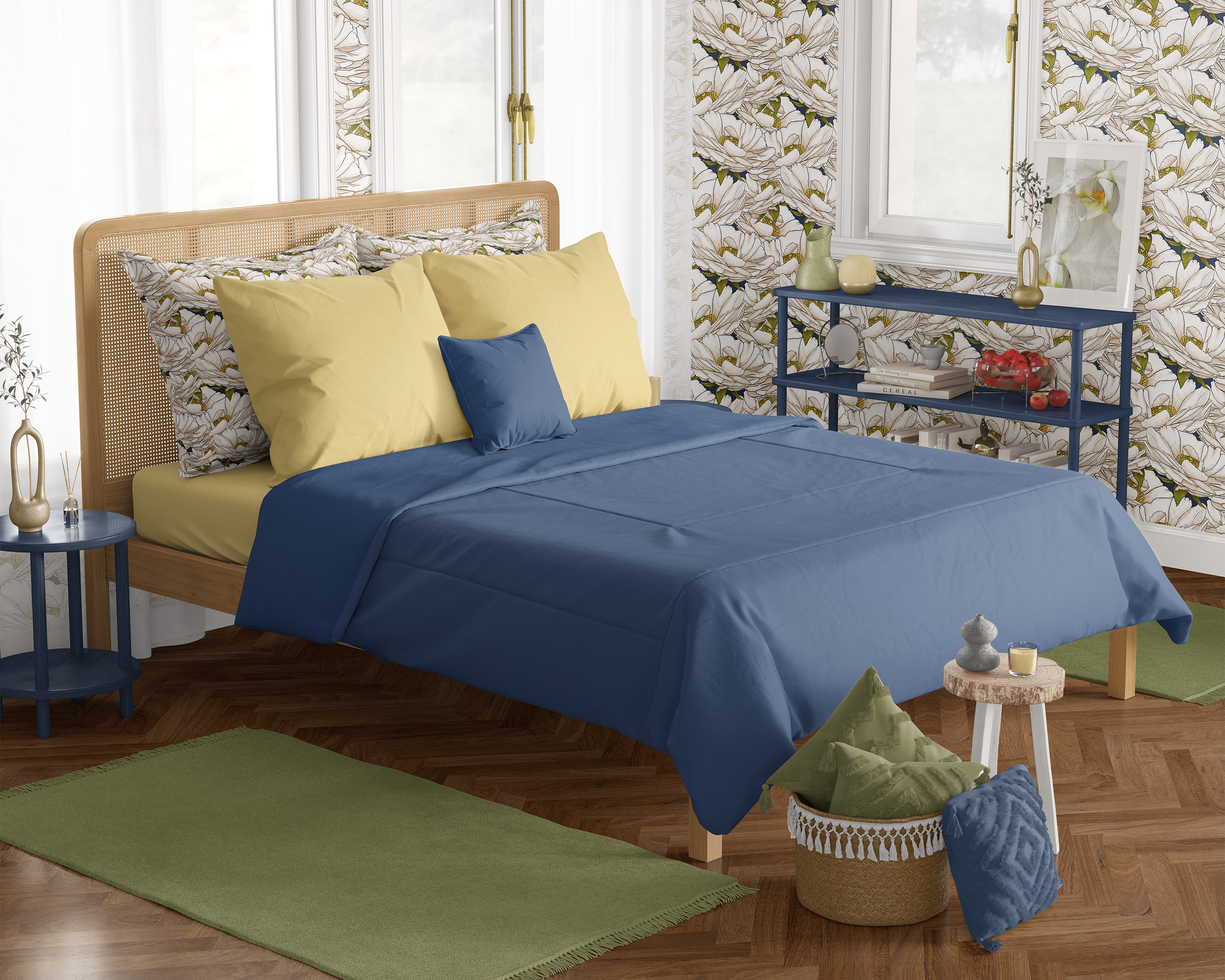
“I don’t like pattern” is something many people say with conviction. Sometimes it’s absolutely true. Other times, it’s shorthand for “I don’t like this kind of pattern,” or “I’m afraid of how pattern will feel once it’s installed.” Our brains have very real responses to visual information—repetition, contrast, movement—and those responses show up in how we react to patterned walls, fabrics, and rugs. In this post, I’m exploring a few possible psychological reasons someone might say they don’t like pattern, and how we can work with that gently in real rooms.
Pattern as information: what the brain is dealing with
Before we talk about “liking” or “disliking” pattern, it helps to remember what pattern actually is: organized visual information.
Our brains are constantly:
Looking for repetition,
Grouping shapes and colors into order,
And scanning for what feels safe vs. chaotic.
Pattern can feel:
Comforting and predictable (a soft stripe, a leafy repeat).
Stimulating and energizing (high-contrast geometrics).
Overwhelming and “noisy” when there’s a lot happening at once.
So when someone says, “I don’t like pattern,” it may be less about pattern as a concept and more about how much information their brain wants to handle in a room they’re meant to rest, work, or connect in.
Possible reasons someone might say “I don’t like pattern”
These are possibilities, not diagnoses—just patterns (no pun intended) that show up often in real projects.
1. Sensory sensitivity or visual overwhelm
For some people, especially those who are sensitive to sensory input, complex pattern can feel like a noisy restaurant: too much to process at once.
They might:
Fatigue quickly in busy retail spaces.
Prefer fewer objects on surfaces.
Gravitate toward solids or very subtle textures.
In a home or workspace, bold pattern in large doses can feel like one more thing the brain has to manage, rather than a backdrop for rest or focus.
2. A strong need for control and calm
Pattern—especially bold, multi-colored pattern—can feel unpredictable to those who crave a high sense of control and order.
It can trigger thoughts like:
“This feels messy.”
“What if I get tired of this?”
“What if it clashes with something I haven’t even bought yet?”
In these cases, “I don’t like pattern” can actually mean: “I’m worried this will introduce a kind of visual chaos I can’t easily edit later.”
3. Past associations and memories
Pattern is often tied to memory: a childhood kitchen, a grandparent’s bathroom, an old rental, a hotel that felt “too much.”
Someone might be reacting to:
A specific era (busy ’80s florals, heavy brocades, certain color combinations).
A pattern that felt dated, oppressive, or at odds with their identity.
So “I don’t like pattern” might really mean: “I don’t want my home to look or feel like that again.”
4. Fear of permanence and regret
Wallpaper and upholstery are bigger commitments than a throw pillow. When pattern is involved, those commitments feel even higher-stakes.
Common underlying worries:
“What if I hate it once it’s up?”
“What if we move, and this feels hard to undo?”
“What if someone else thinks it looks wrong?”
Here, the resistance is often about fear of regret and the pressure of “getting it right,” not an inherent dislike of pattern itself.
5. Identity and self-image
People often want their rooms to reflect how they see themselves—or how they’d like to be seen. Pattern can feel risky if someone equates it with being:
Loud or attention-seeking,
Childish or unserious,
Trendy in a way they worry will date quickly.
In that context, “I don’t like pattern” might really be: “I want to be taken seriously, and I’m worried pattern will send the wrong message about who I am.”
6. Cultural and era influences
Many of us have been steeped in years of “clean,” pared-back, mostly neutral interiors in media and social feeds. Pattern, especially expressive pattern, can feel like a break from the script.
If someone has internalized the idea that: “Good taste” = minimal, light, and unpatterned, then anything bolder may feel “wrong” before it has a chance to feel like home.
“I don’t like pattern” often means “I don’t like this kind of pattern”
One of the most helpful reframes is to treat “I don’t like pattern” as the beginning of a conversation, not the end. Often, it means there is some kind of aversion to:
pattern
large-scale pattern in small rooms
pattern in multiple places at once
pattern in certain colors
For example: Someone may hate a bold black-and-white geometric, but quietly love a soft tonal botanical. They might recoil from a huge floral all over the walls, but happily live with a small, textural stripe on upholstery.
Exploring scale, contrast, placement, and color often reveals that it isn’t pattern itself that’s unwelcome—it’s the way pattern has been experienced in the past.
For interior professionals: how to respond when someone says “I don’t like pattern”
If you’re an interior designer or decorator, this phrase is an invitation to get curious, not to abandon pattern altogether (unless that’s where everyone genuinely lands).
A few helpful approaches:
1. Ask gentle, specific questions
Instead of, “Why not?”, try:
“Tell me about a space with pattern that you didn’t like. What felt off?”
“Is it the color, the busyness, or the scale that makes pattern feel hard to live with?”
“How do you want this room to feel in your body—calm, energized, cocooned?”
The answers give you clues about what their nervous system can comfortably handle and where pattern might still have a role.
2. Show degrees, not just extremes
Many people only see pattern presented as “all-in” or “not at all.” It can help to show:
A very subtle, tone-on-tone pattern vs. a bold multi-color print.
One patterned element (just the rug or just the drapery) vs. pattern in three places.
Nature-inspired motifs vs. hard-edged geometrics.
Laying these out side by side allows those using the space to discover what feels approachable, instead of feeling pushed.
3. Use pattern to support calm, not compete with it
Pattern doesn’t have to shout. It can be a tool for comfort and grounding:
Low-contrast botanicals that read as texture.
Small-scale, irregular patterns that mimic nature’s rhythms.
Stripes or checks in soft, tonal palettes.
When pattern is chosen to soothe rather than stimulate, even pattern-averse people sometimes find themselves drawn to it.
4. Offer clear boundaries and safety nets
For those who are wary, it helps to build in a sense of control:
Start with pattern in easily changeable pieces—pillows, a single chair, a lampshade—before committing to walls or large-scale upholstery.
Use wallpaper in a small, contained space first (a powder room, a pantry, a back hall), instead of starting with the largest room.
Provide mockups or boards that show how pattern interacts with solids, so it doesn’t feel like “pattern everywhere.”
The goal is to make pattern feel like a choice, not a trap.
For those using the space: ways to experiment if you think you “don’t like pattern”
If you’ve always said you’re “not a pattern person,” but you’re curious whether there’s a version of pattern that might feel right for you, you don’t have to leap into full walls of print. You can:
Start tiny
One patterned pillow on an otherwise solid sofa.
A patterned tea towel in a calm kitchen.
A small tray, lampshade, or artwork that introduces a gentle repeat.
Stay tonal
Choose patterns in shades of the same color instead of high contrast.
Look for pattern that reads almost like texture from a distance.
Borrow from nature
Leaves, grasses, clouds, waves, and stone veining all offer pattern that feels familiar to the nervous system.
Try one small “jewel box” space
A powder room, closet, or nook where pattern can live without dominating the areas you spend the most time in.
You’re allowed to move slowly and decide as you go what feels like too much, just enough, or surprisingly comforting.
Pattern isn’t a moral choice—it’s a tool
At the end of the day, pattern is not a test of taste. It’s a tool for shaping how a room feels, that some people love and others use sparingly.
“I don’t like pattern” can mean:
“My nervous system prefers calm, low-input spaces.”
“I haven’t yet seen pattern used in a way that feels like me.”
“I’m afraid of committing to something I can’t ‘unsee’ later.”
All of those are valid starting points. The work for designers and decorators is to listen, translate, and offer options, not to convince anyone they “should” love pattern.
And for those using the space, the invitation is to notice:
What types of pattern, if any, feel soothing instead of stressful?
How might a little bit of well-chosen pattern support the feeling you want in a room, rather than fight it?
If you’re reading this as someone planning a new space—or reimagining an existing home or business—and you’d like help building a wallpaper and fabric story that balances texture, pattern, and practicality for those using the space, you’re welcome to reach out through my Contact Me page to learn more about my paid interior decorating services.
And if this kind of conversation is helpful, you can also:
Subscribe to Surface & Space to have new posts land in your inbox on Fridays.
Get access to a growing library of subscriber-only resources—gentle guides, checklists, and tools to help you think through pattern, color, and materials in your own time. I add to this collection regularly, so it becomes a little toolbox you can return to whenever you’re ready.
© 2025-2026 Gabrielle Hewson. All rights reserved. You’re welcome to share links to this article, but please don’t copy or republish the text or images without my written permission. For licensing, permissions, or any other use beyond linking, please contact me directly.