Designing the Year in Pattern for Interiors - For Trade Clients and Design Professionals
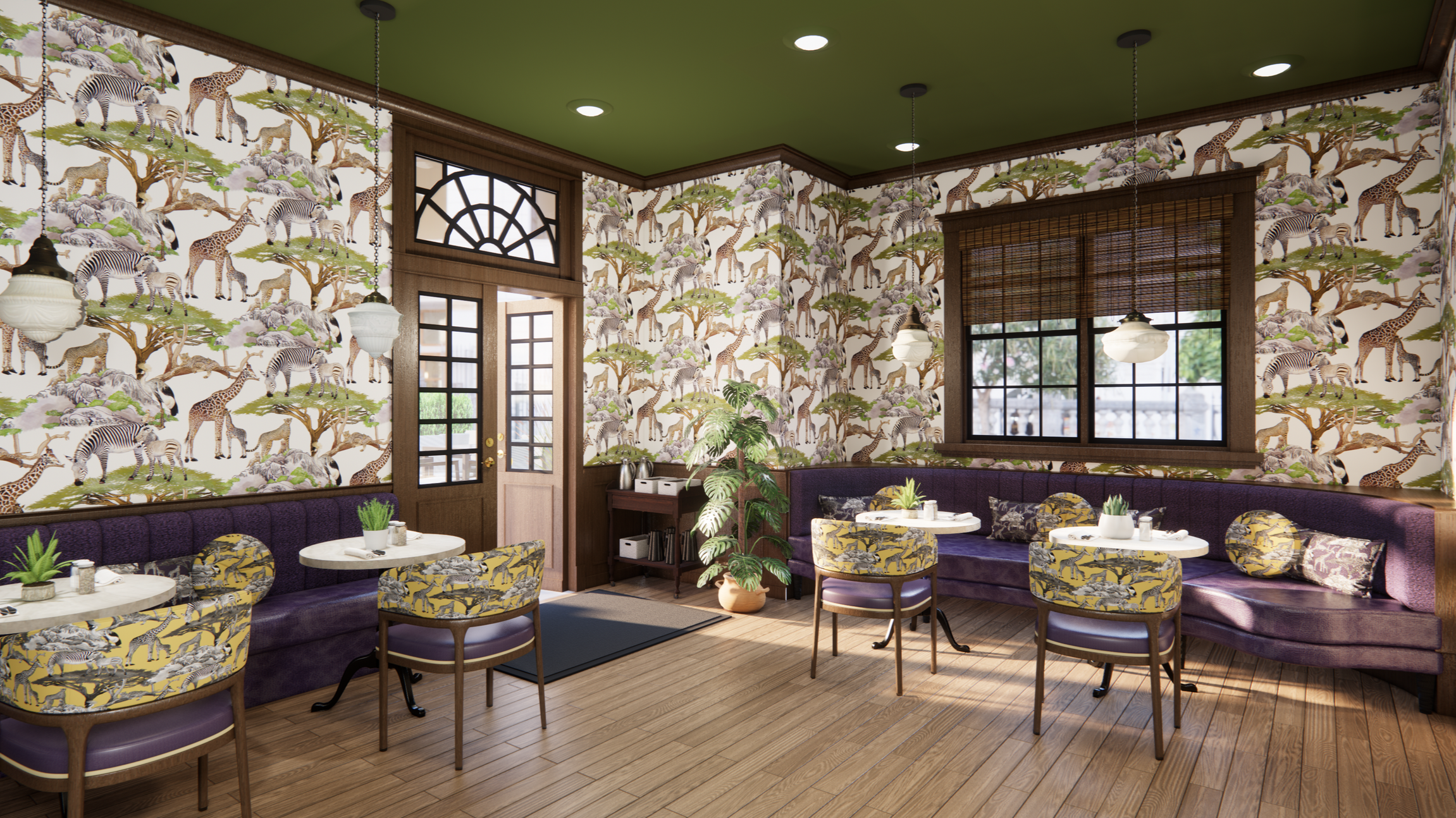
As decorators and designers, we don’t work in tidy seasons. Projects overlap, installs shift, and patterns are chosen in the middle of real life. In my last post, we talked about a handful of “capsule” patterns that can quietly anchor many spaces. In this one, we’re zooming out: thinking about your entire year in pattern—so you can lean on a flexible pattern plan that supports your work, honors your aesthetic, and still leaves room for surprise and discovery.
Why think in “a year” instead of “one project at a time”?
In the previous “Year in Pattern” article, we looked at how a few well-chosen patterns can quietly anchor many projects across different rooms and uses.
This time, we’re widening the lens.
Most of us are trained to think project by project:
New concept.
New palette.
New patterns.
There’s nothing wrong with that—each space is its own story for those using it. But when you zoom out and look at your year as a whole, a few things usually become clear:
Certain pattern moods and scales show up again and again.
Some wallpapers and fabrics behave beautifully in a range of contexts.
You carry your own quiet throughline, whether you’ve named it or not.
Designing the year in pattern simply means: Getting intentional about the patterns, scales, and moods you want to lean on across a year—so you’re not reinventing the wheel every time, while still keeping each space specific to those using it.
This isn’t a rigid plan. It’s a loose, supportive framework.
Step 1: Start with how you naturally design
Before you plan anything, it helps to notice what you already do on instinct—even if you’ve never named it.
Look at your last handful of projects and ask yourself:
Do I lean more botanical, geometric, abstract, textural, or a mix?
Do my spaces usually feel calm and grounded, lively and layered, or somewhere in between?
Where do I typically place pattern—walls, upholstery, windows, smaller accents?
Then notice:
The patterns you trusted enough to specify.
The ones that made it all the way to install and still felt right in person.
Any “almosts” you mentally filed away: this would be wonderful… just not for this room.
This is your raw material.
Your “year in pattern” shouldn’t ask you to become a different decorator or designer. It should amplify what already works in your hands.
Step 2: Define 3–5 emotional jobs pattern will do for you this year
Rather than starting with product or trend reports, start with emotional jobs—what you regularly need rooms to feel like for those using them.
Common ones I see:
Calm & grounded (bedrooms, primary living spaces, wellness rooms).
Focused & clear (offices, workrooms, study nooks).
Joyful & welcoming (entries, powder rooms, guest spaces).
Cocooning & restorative (reading corners, dens, window seats).
Energizing but contained (dining areas, creative studios, showrooms).
Once you’ve named 3–5 emotional jobs, you can ask:
What does calm look like in pattern for me?
What does joyful look like without becoming chaotic?
How does focused show up—more structure, less visual noise?
Your year in pattern becomes less about, “What’s trending?” and more about: “What helps this type of room do its job well for those using it?”
Step 3: Build a flexible “pattern spine” for the year
In the first “Year in Pattern” article, we talked about a small group of capsule prints that can quietly anchor many projects.
Here, we’re taking that idea one step further and turning it into a pattern spine for the year—a simple set of wallpapers and fabrics that can support your emotional jobs across lots of different spaces.
Think in categories rather than specific SKUs:
Anchor wallpapers
The patterns you can picture in multiple projects without hesitation. For example:
One soft geometric or stripe that feels structural but not harsh.
One organic or botanical that can go either airy or enveloping.
One quieter, near-solid texture that reads almost like a painted or plastered wall with depth.
Anchor fabrics
The “quiet heroes” that keep showing up:
A performance linen or twill that takes color and pattern gracefully.
A textured solid (bouclé, chenille, nubby weave) that plays well with print.
One or two small-scale coordinates that can sit beside stronger patterns without competing.
A few “spark” patterns
These are your jewel box moments:
A stronger pattern for a powder room, niche, or feature wall.
A more saturated or higher-contrast print for smaller planes—an accent chair, a banquette back, inside a cabinet.
You’re not locking yourself into these exclusively. You’re giving yourself a trusted baseline to pull from all year, especially when time is tight and decisions are stacking.
Step 4: Gently map pattern energy to seasons
You don’t have to be literal about seasons—no pumpkins or snowflakes required. But you can look at your year and lightly consider:
When your busiest install months usually land.
When those using the spaces you design tend to crave more lightness vs. more cocooning.
Whether certain project types cluster (for example, more renovations wrapping in late fall, more refreshes in spring).
You might notice:
Early-year projects often want clarity and a sense of reset.
Mid-year projects lean into outdoor-connected patterns and fresher energy.
End-of-year projects often want warm, layered, “held” feelings.
Instead of designing season-specific patterns, you can:
Use the same anchor prints in lighter, airier compositions earlier in the year.
Let them show up in richer, more layered compositions later in the year.
For example, one botanical might feel fresh and spare in a spring entry and deeply enveloping in a fall reading room—just by changing what you pair with it in wallpaper and fabric.
Step 5: Decide where you’ll let pattern lead vs. support
Not every surface wants to be the main character. Designing the year in pattern includes deciding where pattern leads and where it quietly supports.
Ask yourself:
Where am I comfortable letting pattern lead—walls, large upholstery pieces, statement windows?
Where do I prefer pattern to play a supporting role—pillows, smaller chairs, backs of shelves, ottomans?
For your own sanity, it can help to define:
2–3 project types where you’ll regularly let wallpaper lead (entries, powder rooms, one primary bedroom wall).
2–3 project types where pattern will mostly live in fabric (family rooms, offices, dining areas).
Then, when a new project comes in, you’re not starting from zero. You’re quietly asking:
“Is this one of my wallpaper-led spaces?”
“Is this a fabric-led project where wallpaper supports—or doesn’t appear at all?”
It’s a simple mental shift that keeps your year feeling organized, without making the work feel formulaic.
Step 6: Leave room for one or two “wild cards”
Even in a thoughtfully planned year, there will be moments where a space asks for something you didn’t anticipate.
I like to make explicit room for:
One or two truly new patterns or collaborations.
One custom or semi-custom pattern for a project that clearly calls for it.
One “this feels like a risk, but the space is asking for it” moment.
This keeps your work from feeling overly systematized and leaves space for that spark of discovery—the pattern that wasn’t on your radar in January but ends up being the perfect fit in September.
You might treat these as:
Spotlights: one per quarter, or whenever a particularly special project appears.
Studio experiments: tested in your own home, studio, or with a trusted long-term collaborator.
Your year in pattern isn’t meant to shut the door on newness. It’s meant to support it in a calmer, more intentional way.
Folding this into your actual workflow
Here’s one simple way to put this into practice without turning it into another full-time system:
1. Quarterly pattern check-in
Once a quarter, set aside a short block of time to:
Pull out your anchor wallpapers and fabrics.
Note where they’ve already shown up and how they performed in real rooms.
Identify any gaps:
“We need a calm vertical.”
“We’re missing a medium-scale organic.”
“We don’t have a good small-scale pattern that works in both upholstery and pillows.”
2. Project intake with pattern in mind
When a new project comes in, quietly ask:
Which emotional jobs apply here? (Calm? Joyful? Focused?)
Which existing patterns from your spine could serve that job?
Does this project deserve one of the year’s “wild card” slots?
This keeps you from grabbing something random just because it’s new or available, and helps you frame pattern as part of the project’s purpose from the beginning.
3. Sample and story-board with your year in mind
When you’re pulling schemes:
Start with your curated pattern spine—your trusted wallpapers and fabrics.
Add new patterns only when there’s a clear reason, not just because they’re enticing.
Let your boards quietly show continuity over time—this becomes part of your studio’s recognizable DNA, even if you never name it that way out loud.
Over a year, this approach:
Reduces decision fatigue.
Helps those using the space feel the strength of your sensibility.
Makes the spaces you create feel more integrated and quietly recognizable, without ever feeling repetitive.
For those using the space: what this means
If you’re someone living or working in the spaces decorators and designers create, you may never think of your home or business as part of someone’s “year in pattern.”
But you do feel when:
A room has been designed thoughtfully from the ground up vs. dropped into a generic template.
Your space feels specific to you, not just a trend snapshot.
Pattern feels like it belongs to your life, rather than something that could be anywhere.
Decorators and designers who think about the year in pattern tend to be:
Less likely to chase every new wallpaper or fabric that appears.
More likely to present options that are genuinely aligned with your architecture and story.
Better able to stand behind the choices they make with you, because they’re part of a larger, considered pattern language.
You’re not getting something generic; you’re benefiting from a pattern vocabulary that’s been lived with, edited, and proven over time.
If you’d like support building your own “year in pattern”
If you’re an interior decorator or designer and want a textile-focused partner to help you shape a calmer, more intentional year in pattern—whether that’s specifying from existing collections, exploring semi-custom work, or creating something fully bespoke for a particular project—I’d be glad to talk about collaborating.
If you’re reading this as someone planning a new space—or reimagining an existing home or business—and you’d like help building a wallpaper and fabric story that balances texture, pattern, and practicality for those using the space, you’re welcome to reach out through my Contact Me page to learn more about my paid interior decorating services.
And if this kind of conversation is helpful, you can also:
Subscribe to Surface & Space to have new posts land in your inbox on Fridays.
Get access to a growing library of subscriber-only resources—gentle guides, checklists, and tools to help you think through pattern, color, and materials in your own time. I add to this collection regularly, so it becomes a little toolbox you can return to whenever you’re ready.
© 2025-2026 Gabrielle Hewson. All rights reserved. You’re welcome to share links to this article, but please don’t copy or republish the text or images without my written permission. For licensing, permissions, or any other use beyond linking, please contact me directly.