The Value of Custom Artistry in a Market Full of Generic Prints
Every scroll shows us another “new” floral, stripe, or check—but not all patterns are created equal. There’s a real difference between generic prints and work that’s been drawn, tested, and placed with intention. In this post I’m unpacking why custom artistry still matters and how it adds long-term value for interiors.
The flood of lookalikes (and what isn’t often seen)
From the outside, pattern can feel interchangeable; one leafy repeat looks a lot like another—especially in a sea of images on a digital screen. But there is a quiet spectrum:
Mass-market prints designed for maximum trend-friendliness and minimum risk.
Semi-generic coordinates that echo whatever is selling well this season.
Truly original artwork that’s been drawn, refined, and scaled around how it will live on a wall, chair, or curtain.
The challenge is that the first two categories are everywhere. They’re easy to access, easy to pin, and easy to specify. The third requires more curation. But that’s also where the lasting value is for the spaces being shaped.
What custom artistry actually provides that generic prints can’t
It’s tempting to frame “custom” purely as exclusivity, but there are more practical, design-focused benefits that matter to interior designers, decorators, and those commissioning the work:
Intentional scale and repeat — When an artist is designing specifically for wallpaper or fabric, they’re thinking in full repeats, not just pretty tiles. That shows up in how the pattern flows around a room, across a sofa, or down a drapery panel—no accidental striping, no awkward cut-offs at eye level.
Built-in storytelling — Original artwork often starts from a place, plant, memory, or mood. Even when the result is subtle, that backstory helps you connect the pattern to the project narrative instead of grabbing something that just “fills space.”
Palette depth and nuance — Generic prints often lean on safe, flat color. Custom pattern work can carry layered hues—slightly offbeat greens, softened blues, nuanced neutrals—that sit more comfortably with real-world materials like stone, wood, and existing textiles
Designing for uniqueness
My curated designs come from a place of experiment, adventure, and joy. They are created for a unique audience of outside-the-box thinkers. I also love creating custom designs for spaces that feel like they couldn’t belong to anyone else.
Working with me for wallpaper and fabric designs means you can mix and match within a world that already hangs together. Each project reads as tailored, but there’s a quiet throughline that’s recognizable. Interior professionals can talk about the line quality, the way the repeat holds up at a certain scale, or how the pattern connects to the architecture or story of the home or business.
Custom is a spectrum
There’s a misconception that “custom artistry” always equals a one-off commission and a long lead time. In reality, you often have three tiers to work with:
Existing collections — Patterns that have already been designed and tested, available in standard colorways. These are still grounded in a cohesive artistic point of view.
Semi-customization — A pattern you already love adjusted slightly—color shifts or scale adjustments—to better serve a space. This is often where small moves create big alignment with your concept.
Full-customization — When the story, brand, or architecture demands it, a brand-new pattern can be created around the project. This is the most intensive route, but it can also become a defining feature for the space.
Why originality matters even when “no one will notice”
Originality has ripple effects that reach beyond one space:
When pattern choices are anchored to original art and specific stories, those interacting with the space are more likely to keep and care for them. That supports a slower, more sustainable design ethos.
Everyone notices when a space feels like someone thought it through. Original pattern work is one of the things that signals that level of care, even if they couldn’t name exactly why.
Custom artistry isn’t just aesthetic
When you’re working directly with a pattern designer, you can test scale, placement, and color before committing to larger quantities. That reduces the chance of getting to install day and realizing the repeat looks awkward along the sloped wall by the stairs (sometimes called the “stair rake”) or reads differently in real light.
Additionally, custom artistry supports:
Patterns that won’t feel dated in a year — Because they’re rooted in an actual hand and story, not just a passing trend.
A better fit to the space — The pattern can be scaled and colored specifically with the architecture and light in mind, which means it will sit more comfortably in the room than a generic print.
Choices designed to age well — which is valuable for the enjoyment of those using the space, can support resale potential if that’s a consideration, and contributes to sustainability by giving the work a longer life installed.
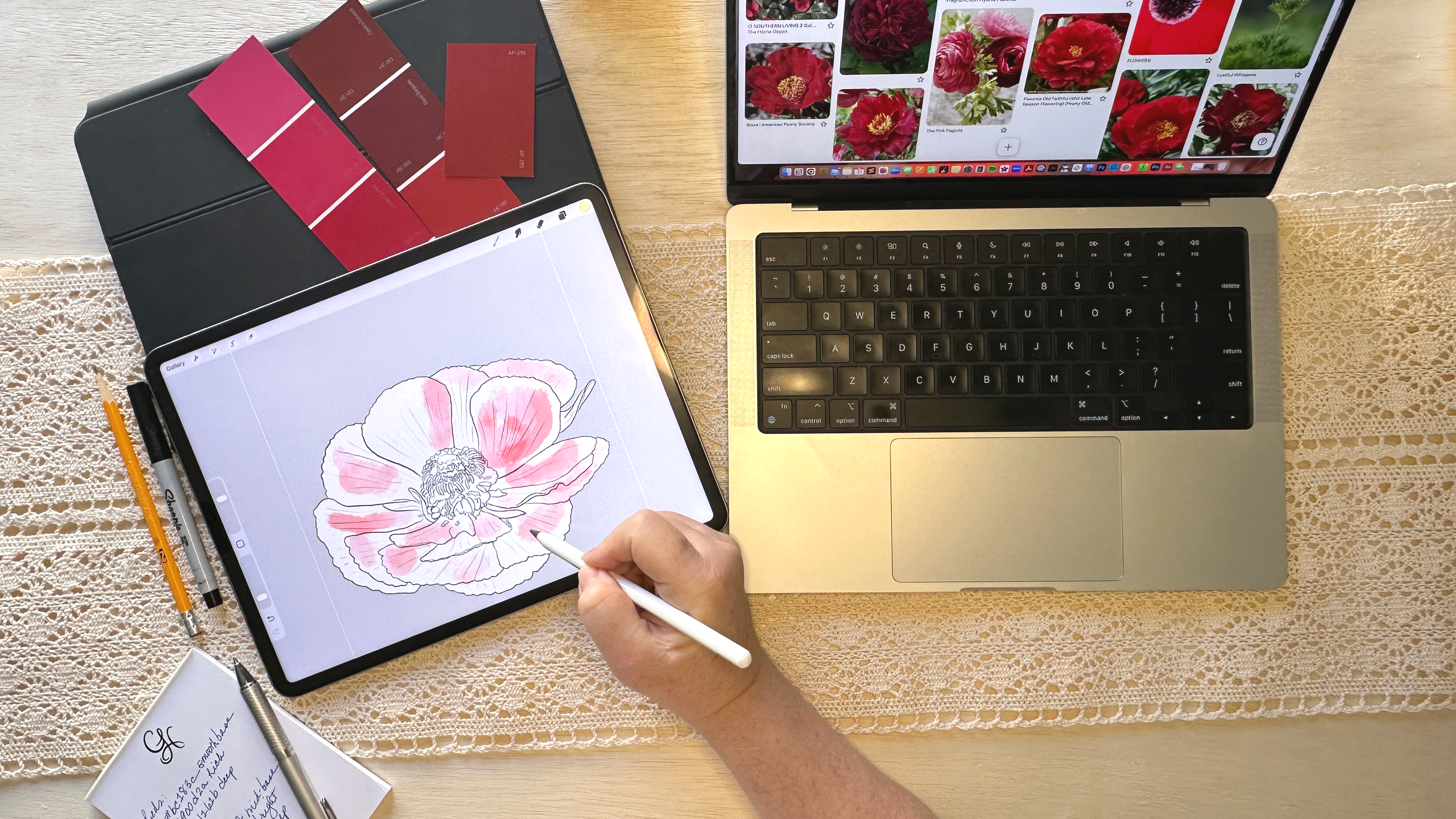
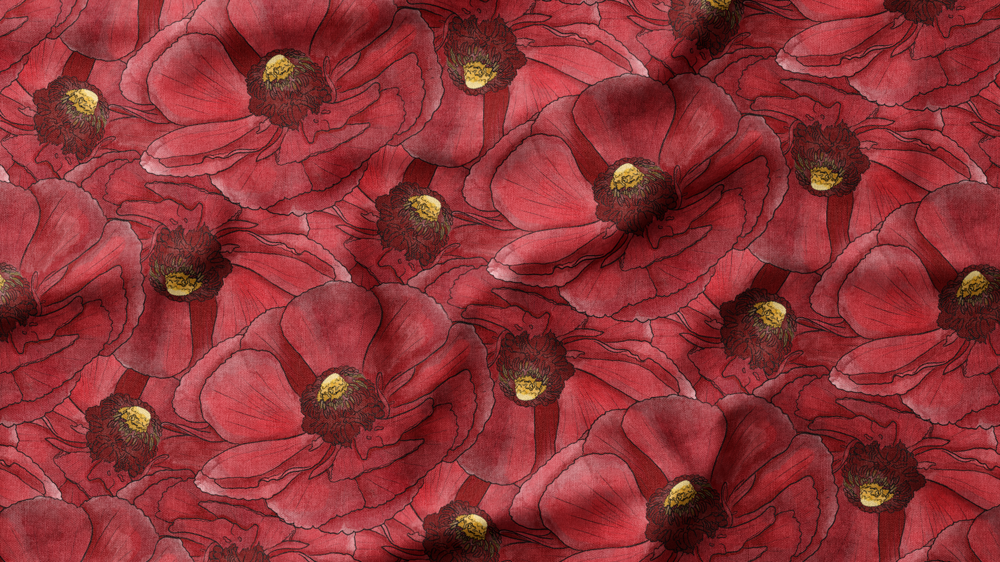
What became of the red ranunculus sketch above? Gorgeous and boldly colored wallpaper and fabric (pictured below)
If you’re interested in building a more distinctive pattern language into your projects—whether that means specifying from existing collections, adapting a favorite design, or commissioning something truly custom—I’d be glad to talk about collaborating. You can reach out to me to start a conversation about upcoming interiors or product work.
Ready to see these patterns in person? You can easily request samples by clicking “Request A Sample” at the bottom of any collection page on my website. Visit my curated wallpaper and fabric collections.
Subscribe to Surface & Space for new articles in your inbox and instant access to two free printable substrate guides (wallpaper & fabric), plus a bonus PDF on Conscious Creators of Gentle Textiles.
© 2025-2026 Gabrielle Hewson. All rights reserved. You’re welcome to share links to this article, but please don’t copy or republish the text or images without my written permission. For licensing, permissions, or any other use beyond linking, please contact me directly.