Timeless Design Is Sustainable Design
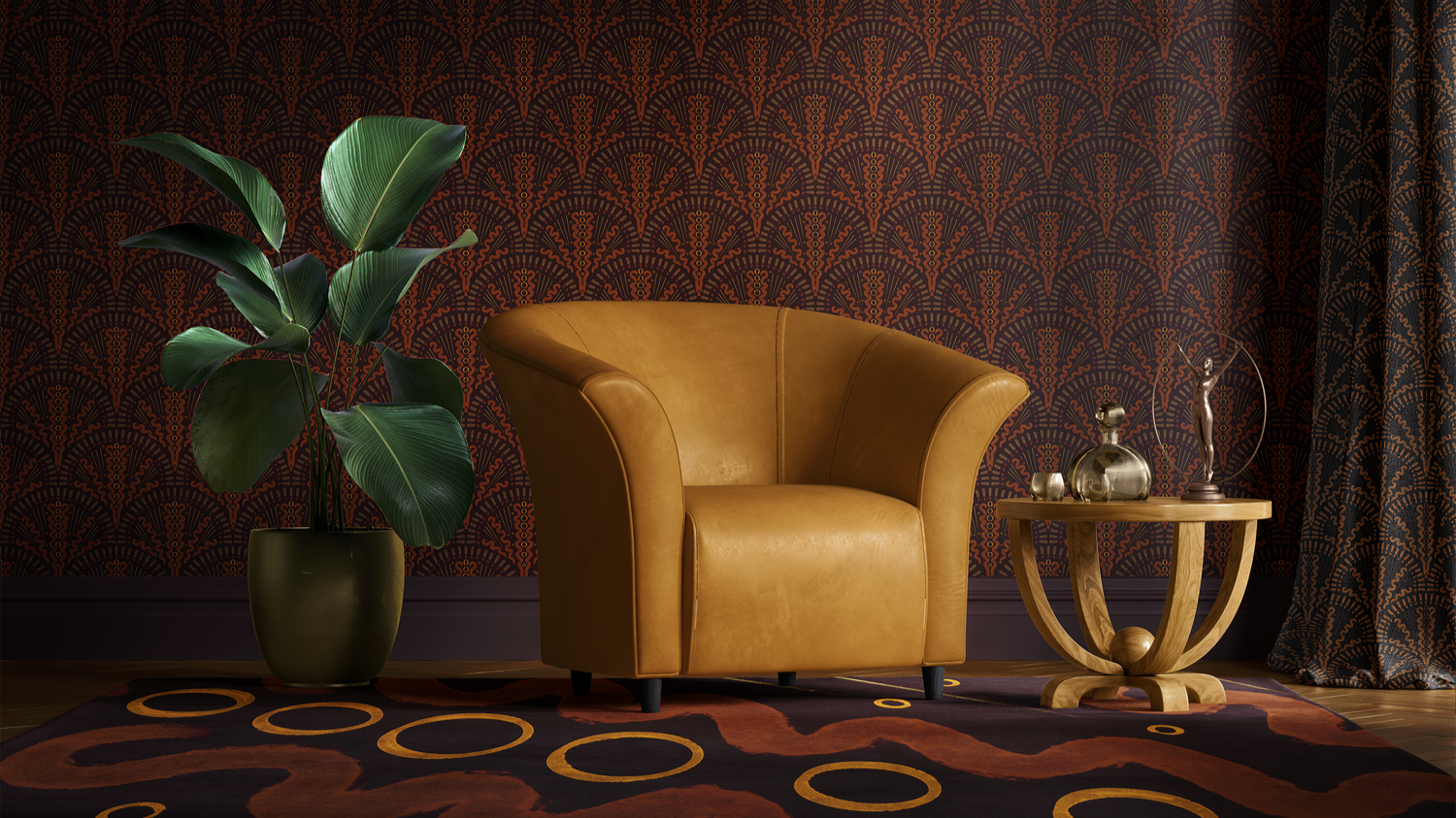
A reupholstered tub chair, a refinished side table, and layered Feeling Africa pattern show how timeless color and thoughtful reuse keep a room—and its stories—alive.
Why rooms that age well are kinder to the earth, the budget, and those using the space
We often talk about sustainability in terms of labels: “eco,” “green,” “non-toxic,” “recycled.” Those markers absolutely matter. But there’s another, quieter form of sustainability that happens long before a tag is read or a sample is ordered:
Making design decisions that don’t need to be ripped out and replaced in a few years.
Timeless design isn’t about being safe or boring; it’s about choosing patterns, colors, and materials that can flex with changing seasons, new art, different furniture, and even different people using the space over time.
When a room continues to feel right ten years from now, that’s fewer sofas in landfills, fewer rushed renos, fewer “this never really worked” purchases—and a lot more ease for those living and working in the space every day.
If you’re an interior designer or decorator, this is probably already how you instinctively think. If you’re reading this as someone shaping your own home or small business, consider this a gentle guide to thinking of “timeless” not as a style, but as a sustainable design strategy.
Fast décor vs. rooms that last
Scrolling culture loves quick before-and-afters: fresh paint, a fast furniture haul, lots of small décor items. Those projects can be fun, but they often come with hidden costs:
Items that feel dated in a year or two.
Fabrics that pill, fade, or stain quickly.
Wallpaper or paint colors that fight with real-life light and daily use.
The result? Things get replaced more often. That means more production, more shipping, and more waste.
Timeless design takes a different path. It asks questions like:
How do those using the space want to feel here five years from now?
What needs to withstand daily life—kids, pets, work, gatherings, or all of the above?
What existing pieces (architecture, heirlooms, built-ins) are worth honoring and building around?
From there, pattern, color, and materials are chosen with longevity in mind: visually, emotionally, and physically.
What actually makes a design feel timeless?
“Timeless” can sound vague, so let’s get more concrete. Designs that age well tend to share a few traits.
Proportion and scale that respect the architecture
Rooms feel more grounded when:
Pattern scales take into account ceiling height, window size, and sightlines.
Furniture proportions suit the room (no tiny rug in a large living room, no massive sofa squeezing into a modest one).
Wallpaper repeats are tested so they don’t create awkward striping at eye level or chop across key features.
When scale and proportion are thoughtfully chosen, those decisions don’t have to be revisited every time someone buys a new lamp or pillow.
Palettes with room to breathe
Timeless doesn’t mean colorless. It means:
A core palette that harmonizes with fixed elements: flooring, trim, stone, cabinetry.
Accent colors that can shift over time—through art, pillows, throws, and smaller items—without the whole room needing to change.
Patterns that hold two or three nuanced hues rather than a dozen competing ones.
This kind of palette makes it easy to refresh seasonally or over the years without starting from scratch.
Patterns that support the story, not steal it
Timeless patterns usually:
Connect to something enduring—botanicals, geometry, hand-drawn motifs, textile traditions.
Offer rhythm and interest without feeling frantic.
Can move from one room to another if furniture layouts change.
When pattern is tied to story and structure instead of a fleeting trend, it stays relevant longer—and those using the space are more likely to keep and care for it.
Longevity is a sustainability strategy
Every time a piece lasts, that’s one fewer item that needs to be manufactured, shipped, installed, and eventually discarded.
Some very practical ways timeless design supports sustainability:
Fewer “regret” purchases. When decisions are made with care—scale tested, swatches reviewed in real light, samples touched and lived with—there’s less impulse buying and less replacing.
More reupholstering, less rebuying. A well-made chair in a timeless silhouette can be reupholstered several times over its life instead of being replaced every time a color trend shifts.
Wallpaper that earns its keep. A thoughtfully chosen wallcovering that still feels right a decade later avoids the cost—financial and environmental—of stripping, patching, and starting over.
Spaces that adapt. When the big moves (layout, major textiles, foundational patterns) are flexible, it’s easier to adapt to new routines, family changes, or evolving business needs with small adjustments instead of full gut jobs.
In the room above, the tub chair and side table are great examples of this in action. Instead of replacing them, I imagined the chair reupholstered in a pattern that feels at home with the rest of the space—warm ochres, tobacco browns, and layered Feeling Africa wallpaper and drapery—while the side table is simply refinished so its shape and wood tone still feel grounded. The silhouettes stay familiar, but their new finishes let them belong in a bolder story. That’s what timeless, sustainable design often looks like in real life: not a constant stream of new things, but a few well-made pieces that are invited to evolve as the room and its color palette do.
In this same space, the area rug pushes that idea even further. Its pattern is a dramatically scaled-up, abstracted take on the pattern from the wallpaper—those swooping shapes and small circles of orange reinterpreted into larger, looser strokes underfoot. That bolder scale helps visually “weave” the walls and floor together while also anchoring the warm faux-leather tub chair, turning it into a clear focal point without needing a single new piece of furniture.
Sustainability isn’t only about what something is made of. It’s also about how long it serves those using the space—and how much joy it continues to bring.
How pattern and fabric choices support timelessness
As a wallpaper and fabric pattern designer who also works as a decorator, I think about timelessness every time I draw a motif or suggest a fabric.
Here are a few principles I lean on:
Choose patterns that can travel
Good candidates for long-term use:
Botanicals that feel more like a quiet garden than a novelty print.
Geometrics with clear structure and a bit of softness in the line.
Textured solids (bouclé, linen blends, subtle weaves) that pair well with bolder motifs.
If a pattern could live comfortably in more than one room or on more than one piece, it’s already more resilient.
Let high-touch pieces carry the timeless load
The pieces that see the most daily interaction—sofas, dining chairs, headboards, large expanses of wallpaper—are where timelessness has the greatest impact.
On upholstery, I often recommend performance or durable fabrics in grounded colors and textures, with pattern that won’t grow tiresome when seen and touched every day.
On walls, especially in main circulation spaces, I gravitate toward patterns that shape the mood without shouting—a gentle stripe, a leafy repeat, a quiet geometric.
Accent pillows, throws, smaller side chairs, and art are wonderful places to play with bolder trends or seasonal shifts.
“Timeless” doesn’t mean never changing
There’s room for freshness within a timeless foundation. In fact, that’s part of what makes it sustainable.
Some gentle, low-waste ways to evolve a space over time:
Swapping pillow covers while keeping the inserts.
Changing art or re-framing existing pieces.
Rotating smaller rugs between rooms when layouts allow.
Repainting a single accent piece (a side table, a mirror frame) instead of an entire room.
Updating lampshades, bedding, or table linens to shift the mood.
A timeless base makes these small changes more satisfying because the room stays cohesive as it evolves.
Talking about timelessness with those you’re designing for
If you’re a designer or decorator, you may feel the tension between:
Requests inspired by fast-moving images online, and
Your knowledge of what will actually age well in a particular space.
A few phrases that can help keep the conversation grounded:
“Let’s choose pieces that will still feel like you in five or ten years.”
“If we build a timeless base here, we can have fun changing the smaller things more often.”
“This pattern will give you the feeling you’re drawn to, but in a way that won’t feel dated quickly.”
“One of the most sustainable choices we can make is to get this right once, so you’re not replacing it in a couple of years.”
If you’re reading this as someone hiring a professional, you can think of timeless design as a way of respecting your own time and resources. You’re investing in decisions that don’t require constant revisiting—and that’s a sustainable choice in more ways than one.
When to intentionally lean into trend
Timeless design doesn’t mean never touching a trend. It simply means choosing where that trend lives.
Good places for a “trend-forward” moment:
A powder room, where a bold wallpaper can feel like a delightful surprise.
One or two accent pillows in a seasonal or of-the-moment motif.
A small side chair or stool upholstered in a playful fabric.
Table linens or bedding that can be rotated more often.
The difference is intentionality: trends are used as spice, not as the entire meal.
If you’re an interior decorator or interior designer and want a textile-focused partner to support your pattern-rich projects, I’d love to collaborate.
If you’re a novice or professional and you would like help building a fabric and wallpaper story that balances texture and pattern for those using your spaces, you can Contact Me to engage my interior decorating services.
And, if this kind of discussion is helpful, you can:
Subscribe to Surface & Space to have new posts land in your inbox on Fridays.
Get access to a growing library of subscriber-only resources—guides to help you think through pattern, color, and materials in your own time. I add to this collection regularly, so it becomes a little toolbox you can return to whenever you’re ready. your own time. I add to this collection regularly, so it becomes a little toolbox you can return to whenever you’re ready.
© 2025-2026 Gabrielle Hewson. All rights reserved. You’re welcome to share links to this article, but please don’t copy or republish the text or images without my written permission. For licensing, permissions, or any other use beyond linking, please contact me directly.