What To Expect When You’re New to Wallpaper
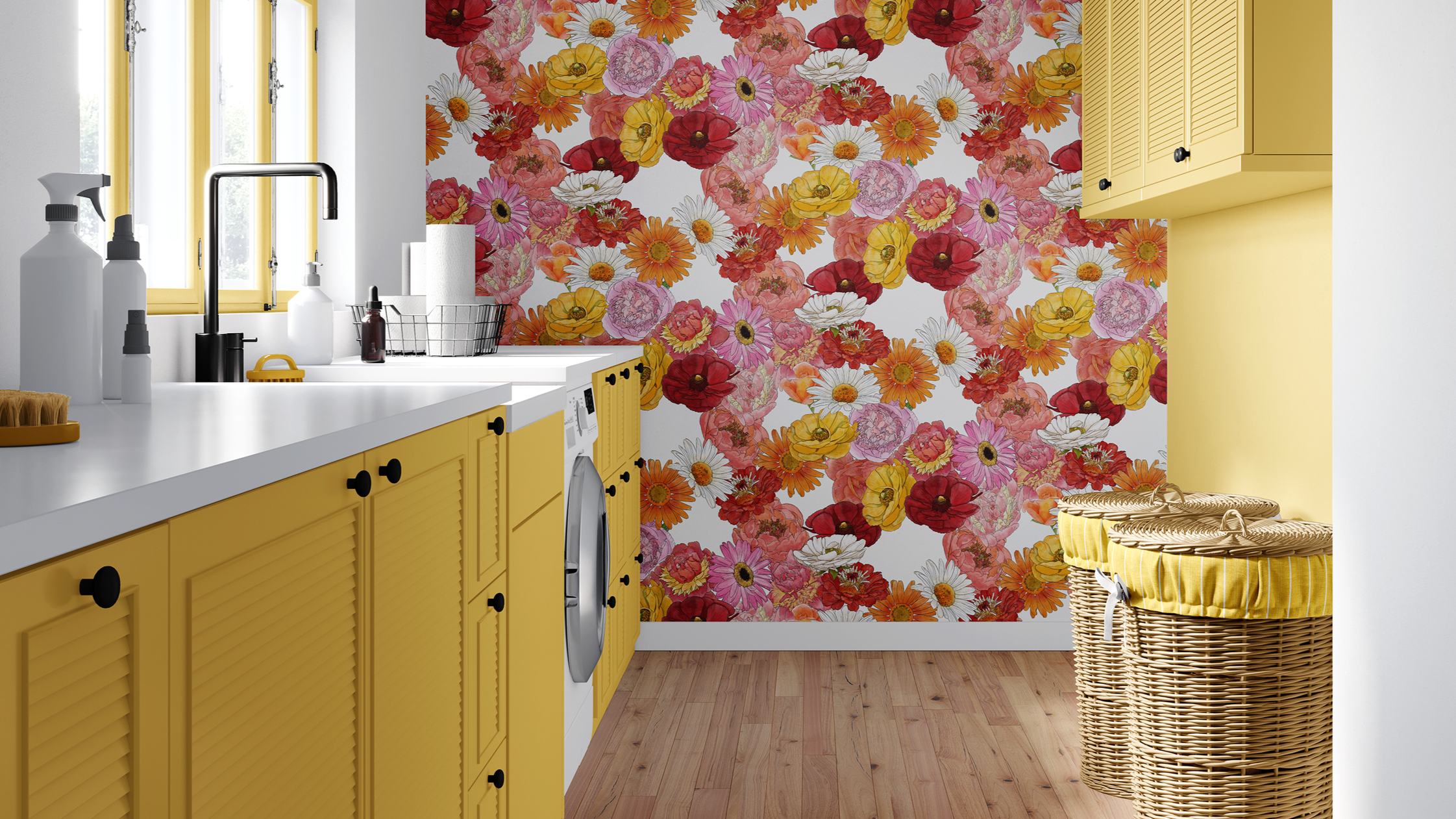
If you’ve mostly worked with paint and textiles, wallpaper can feel like a big leap—more commitment, more logistics, more “what if it goes wrong?”. The good news: once you understand how wallpaper behaves (and what to expect at each step), it becomes one of the most powerful tools you have for shaping how a space feels. In this post, I’m breaking down what to expect when you’re new to wallpaper—from sampling and scale to substrates and installation—so you can use it confidently for those using the space.
Wallpaper feels “high risk” for a reason (and why that’s normal)
Even seasoned interiors professionals hesitate with wallpaper sometimes. It asks more up front:
It’s more permanent than a throw pillow.
It involves another trade (the professional wallpaper installer).
Mistakes are harder to hide.
And then there’s the emotional layer:
Those living or working in the space may have memories of bad ’80s borders or stubborn removal jobs.
Everyone has seen a pattern that felt too loud, too trendy, or just “too much.”
If you feel a little tight in your shoulders when you suggest wallpaper, that’s completely understandable.
What helps is reframing wallpaper from “scary commitment” to: A highly deliberate, high-impact surface treatment that can quietly carry mood, value, and story in a space—especially when the rest of the room stays calm.
Once you’ve seen a few projects all the way through—that moment when the paper is up and the room exhales—it becomes much easier to advocate for it.
Step 1: Sampling with your future self in mind
If you’re new to wallpaper, sampling is not optional. It’s where you learn how a pattern behaves in the actual space.
When a wallpaper sample arrives, I like to:
Look at it from across the room.
Does it read calm, energetic, playful, or serious?
Does the contrast feel too strong for the room’s light?
Look at it up close.
How does the line quality feel—brushed, hand-drawn, crisp?
Are there subtle colors in the ground that don’t show on screen?
Look at it at different times of day.
Morning light, midday, evening lamp light.
Does the color shift in a way that suits those using the space?
If you’re working with those living or working in the room, invite them to:
Tape the sample where they’ll actually see it daily (behind a sofa, next to a cabinet, in an entry).
Notice how it feels over a few days, not just at first glance.
You’re not just testing the pattern—you’re testing the relationship between pattern, light, and routine.
Step 2: Getting comfortable with scale and repeat
Scale is often where wallpaper feels mysterious at first. On a small sample or screen, it’s hard to imagine how the repeat plays across a full wall.
A few principles I come back to:
Small patterns can feel busy or quiet, depending on contrast.
Tiny, high-contrast motifs can read as visual noise.
Tiny, low-contrast motifs can read as gentle texture.
Medium-scale patterns are often the easiest to live with.
They show their character without dominating.
They work in a wide range of room sizes.
Large-scale motifs need room to breathe.
Beautiful in taller spaces, feature walls, and rooms where you can step back.
In very small rooms, they can feel wonderfully immersive if that’s the goal.
When in doubt:
Ask for a larger strike-off (if available) or order an extra roll to pin up in the space.
Sketch the repeat across a rough elevation so you can see how many motifs will fit between corners, doors, and windows.
Think about where eyes land—at the sofa, from the entry, from the dining table—and make sure the rhythm supports those views.
Scale isn’t about rules; it’s about how the pattern breathes inside the architecture.
Step 3: Understanding substrates (without needing to be a chemist)
You don’t need to memorize every technical substrate, but it helps to know the broad categories:
Non-pasted:
Beautiful hand, often matte and refined.
Subtle embossed leather texture with breathability and durability and woven backing.
Great for long-term installations in high-traffic areas,
PVC-Free Type II:
Polyester/natural fiber face with a refined linen texture
Great for permanent, environmentally transparent installations
Vinyl-coated or performance-oriented substrates:
More wipeable and durable; helpful in high-traffic areas, kids’ spaces, or commercial environments.
Matte embossed leather texture with woven backing
A permanent solution for commercial spaces like offices, hotels and more
Other textural wallcoverings (grasscloth and metallics):
Bring depth, texture, and a more tactile presence.
Often less forgiving with moisture and stains, and seams can be more visible.
Examples:
Grasscloth is high texture and good for low-traffic areas or tucked away spaces
Metallics have a more subtle woven texture and are good for any indoor space you want to have a high-end touch
When you’re new to wallpaper, you don’t have to be the installer. But it is helpful to:
Be honest about how hard the room will be worked (mudroom vs. formal dining).
Ask your wallpaper source or installer which substrates they recommend for that use.
Communicate clearly with those using the space about what to expect (for example, visible seams in grasscloth, or slight paneling in metallics).
You’re curating experience, not selling indestructibility.
Step 4: What to expect from a professional wallpaper installer
One of the biggest mindset shifts when you’re new to wallpaper is realizing: Your professional wallpaper installer is a partner, not an afterthought.
A good installer will:
Confirm measurements and yardage needs.
Talk through pattern placement—where to center a motif, where seams will fall.
Advise on wall prep (especially in older homes or over patched surfaces).
Catch potential issues with substrates or patterns before install day.
What you can expect—and prepare for:
Questions about the pattern layout.
Do you want a main motif centered on a focal wall?
Are there places you’d prefer to “hide” seams?
Requests for extra material. Ask for quantity and to include all room info including pictures and exact room measurements before wallpaper is purchased—Especially for complex repeats, angled ceilings, or patterns that need careful matching.
A bit of mess and disruption.
Paste buckets, drop cloths, ladders, and tools.
For those using the space, it’s helpful to know the room won’t be functional that day.
If you’re an interiors professional, building a good relationship with a trusted installer is one of the best investments you can make. You don’t have to know everything; you just have to be open and collaborative.
Step 5: Talking about wallpaper with those using the space
Sometimes the biggest hurdle isn’t technical—it’s emotional. Those living or working in the space may have questions like:
“Will this look dated in a year?”
“What if I get tired of it?”
“Isn’t wallpaper hard to remove?”
You might say:
“Paint is wonderful, but wallpaper can quietly carry the mood of the room in a way paint alone can’t. We’re using it here to support how this space feels every day.”
“We’re choosing this pattern because it reflects your story and the architecture, not just a passing trend. That’s what helps it feel timeless.”
“Modern installers and substrates make removal more manageable than it used to be. We’re planning this to have a nice long life, but you’re not locked in forever.”
It can also help to start with:
Smaller spaces (like powder rooms, entries, or nooks).
Feature walls that anchor a room without wrapping every surface.
Patterns with softer contrast and hand-drawn or organic line, which tend to age more gracefully.
You’re not just installing wallpaper; you’re inviting those using the space into a different way of experiencing their rooms.
Common myths (and the gentle truth behind them)
A few beliefs come up again and again when someone is new to wallpaper:
Myth 1: Wallpaper is always “too much.”
Reality: Wallpaper can be whisper-soft or boldly dramatic. It’s a tool, not a personality type. There are patterns that read like quiet texture and others that feel like art—both have their place.
Myth 2: Wallpaper ruins walls.
Reality: With proper prep, primer, and removal techniques, many modern products come down much more cleanly than older generations. Working with a skilled installer is key.
Myth 3: Wallpaper is automatically “fussy” or formal.
Reality: Some of the most relaxed, lived-in spaces use wallpaper to soften edges and wrap rooms in warmth—especially when paired with comfortable upholstery and natural materials.
Myth 4: Wallpaper is only for big budget projects.
Reality: Because wallpaper has a lot of visual impact, using it in targeted areas can make modest budgets feel more memorable and tailored.
For designers and decorators: giving yourself permission to be “new”
Even if you’re seasoned in other areas, it’s okay to be at the beginning of your wallpaper comfort curve.
A few things that can help:
Start with one or two projects where wallpaper plays a clear but contained role—an entry, a powder, a single primary bedroom wall.
Build a small “trust library” of patterns and substrates you’ve seen behave well, and reach for those when you need something reliable.
Ask your installer what they liked or didn’t like about working with particular products—most are happy to share.
Take before/mid/after photos so you can see how much the paper is doing for the room.
Over time, you’ll develop your own instincts:
“This space wants a small-scale pattern.”
“This architecture needs something vertical.”
“This room is busy enough; let’s keep contrast low.”
You won’t get there by reading alone; you’ll get there by using wallpaper thoughtfully and noticing what happens.
For those using the space: what “new to wallpaper” means for you
If your designer or decorator has shared this with you, know that:
They’re thinking deeply about how this choice will affect your daily life, not just your photos.
They’re pairing beauty with practicality—light, durability, cleanability, and long-term enjoyment.
They’re likely choosing patterns and materials they trust, especially on your early wallpaper projects together.
You don’t have to love wallpaper in every room. You just have to be open enough to see what a well-chosen pattern can do in one.
If you’re reading this as someone planning a new space—or reimagining an existing home or business—be sure to visit and explore my collections. And if you’d like help building a fabric and wallpaper story that balances texture, pattern, and practicality for those using the space, you’re welcome to reach out through my Contact Me page to learn more about my paid interior decorating services.
And if this kind of conversation is helpful, you can also:
Subscribe to Surface & Space to have new posts land in your inbox on Fridays.
Get access to a growing library of subscriber-only resources—gentle guides, checklists, and tools to help you think through pattern, color, and materials in your own time. I add to this collection regularly, so it becomes a little toolbox you can return to whenever you’re ready.
© 2025-2026 Gabrielle Hewson. All rights reserved. You’re welcome to share links to this article, but please don’t copy or republish the text or images without my written permission. For licensing, permissions, or any other use beyond linking, please contact me directly.