Creating Custom Wallpaper & Fabric Patterns: The Basics
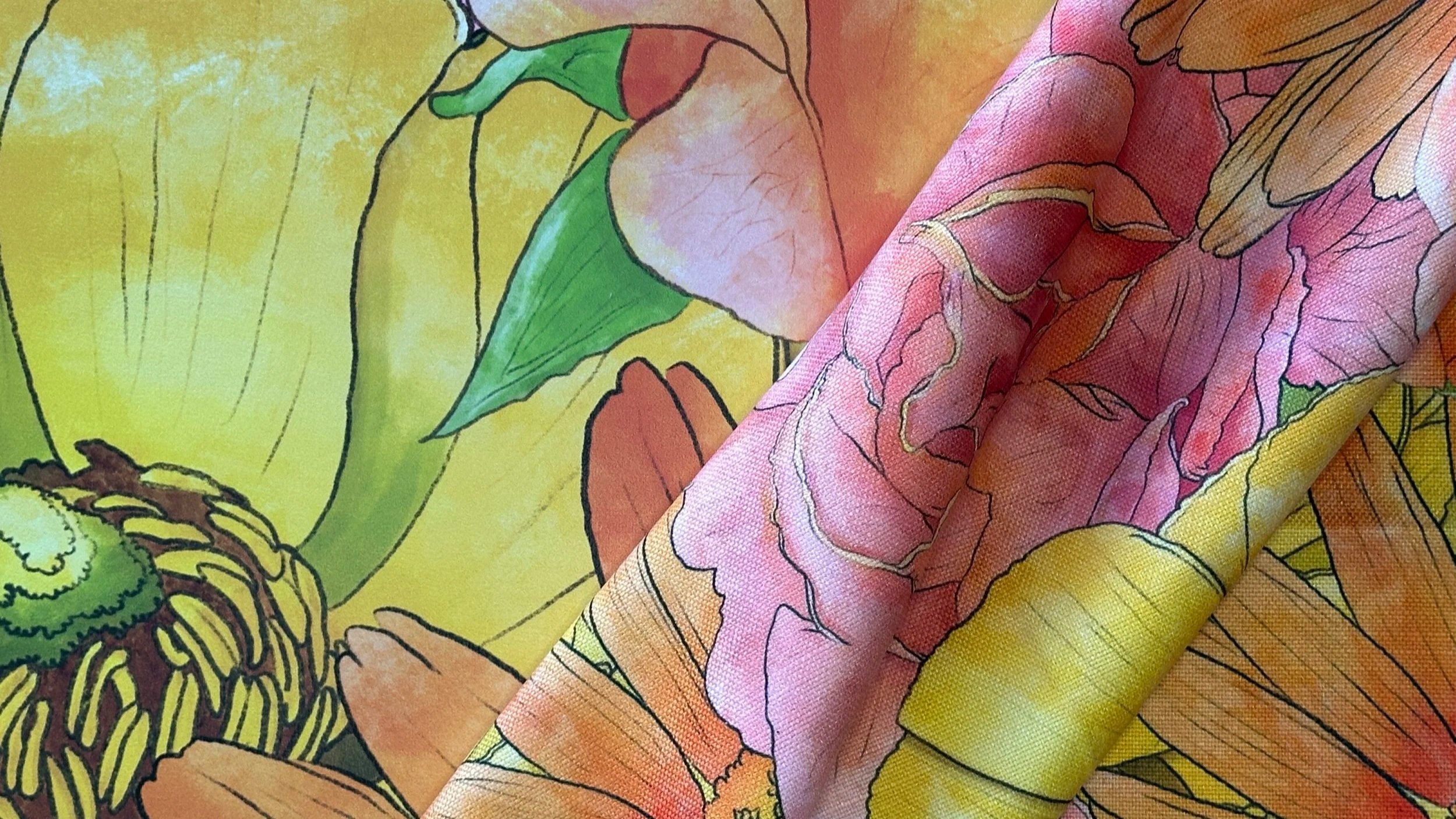
Custom wallpaper and fabric patterns aren’t just “pretty prints.” They’re visual stories created for a particular space, shaped by the interior professional designing it and those using the space every day. Getting there is a back-and-forth process: listening, sketching, refining, sampling, and translating a room’s needs into a repeat that belongs there and nowhere else. In this post, I’m sharing the basics of how custom patterns are created, why they cost what they do, and how to collaborate with a pattern designer so you get their best work—not just their most edited-by-committee version.
Custom pattern starts with people, not pixels
Before a single motif is drawn, a good pattern designer is getting to know two things:
The professional designing the space — The interior designer or decorator who understands:
the architecture,
floor plan and light, and
How the room needs to function.
The humans and their furry, feathered, gilled, and/or scaled family members who will live or work in the space — their:
Story and preferences,
Comfort level with color and pattern,
Lifestyle (formal, relaxed, kid-filled, pet-filled),
And the emotional tone they want (calm, dramatic, joyful, grounded).
Early conversations often sound like:
“How do you want to feel in this space?”
“What brings you comfort and joy?”
“What’s the story of this room? When is it at its best?”
“What do you not want to see in this pattern?”
“Which direction do you want the room to lean—classic, playful, restrained, lyrical?”
Commissioned custom pattern work is intimate by design. It’s not about forcing a “signature style” onto a space. It’s about weaving together the designer’s vision for the end-user(s)’s personality(ies), and the designer’s own artistic language into something that feels inevitable once it’s there.
Step-by-step: how custom wallpaper & fabric patterns are created
Every studio has its own process, but most custom pattern creation follows a version of these steps that I employ:
Step 1: Discovery & documentation
There are three ways I may work with those commissioning a custom pattern:
Directly with the interiors professional(s) (designer, decorator).
Directly with those using the space, if they haven’t yet engaged a design professional.
With a combined group that includes both pros and end users.
Together, we clarify what is desired and needed in a pattern:
Where the pattern will live – walls, ceiling, upholstery, drapery, bedding, or a combination.
Why a pattern is desired and what job it needs to do in the room.
Who will be using the space most where the pattern will live.
How it will be seen – close-up (on chairs and pillows) vs. from across the room (on walls or drapery).
Desired mood – airy, cocooning, formal, whimsical, tailored, organic.
Practical needs – light exposure, cleanability, pattern scale around windows/doors, and repeat size.
If a particular hero color is important—often a background color—I also encourage sharing Pantone references, hex codes, or favorite existing items to match or harmonize with.
This is where clear, honest communication matters most. If those using the space secretly dislike a certain flower, color, or motif but don’t say so, everyone loses time and energy. The more transparent everyone is here, the more comfortably the pattern supports their lifestyle and how they want the room to feel.
The documentation that comes out of this conversation becomes a brief: a concise record of needs, constraints, and possibilities. It’s something we can both refer back to as the work unfolds, so decisions stay grounded in what we agreed the space truly needs.
Step 2: Concept sketches & direction
I then translate the brief into early ideas:
Thumbnail sketches, loose motifs, or digital roughs.
2–3 initial directions based on the same story (e.g., “organic floral,” “more graphic botanical,” “softly geometric interpretation, “the visual story being told”).
The interior professional and end-user respond at this level:
“This one feels closest to us.”
“We love the movement of A, but the simplicity of B.”
“This feels too formal; we’re hoping for something more relaxed.”
At this stage, we're shaping direction, not adjusting leaves by 2 millimeters. Micro-managing now risks sanding all the character out before the pattern has a chance to breathe.
Step 3: Building the repeat
Once a direction is chosen, I:
Create the final motifs (by hand or digitally).
Build the actual repeat (the tile that will flow across the wall and/or fabric).
Test how the pattern looks at different scales.
I then provide one or more of the following:
A digital example of a wallpaper panel or fabric swatch showing the repeat;
A digital mocked-up version of the room it will live in or, for upholstery, window treatments, pillows, or bedding, a similar representation mock-up of where the fabric will live; and,
Possibly 1–2 approximate scale options.
This is where my technical expertise is doing the heavy lifting: avoiding awkward striping, strange negative spaces, or motifs “cutting” in unfortunate spots. Trust is vital here—this is my craft.
Step 4: Color exploration & refinement
With the repeat structured for wallpaper and/or fabric, the conversation shifts to fine-tuning color and nuance. Together, we look at:
2–4 colorways aligned with the space’s palette.
How the pattern interacts with existing finishes (stone, wood, metal, paint).
How contrast levels affect mood—lighter and more open vs. deeper and more enveloping.
This is the phase where specific feedback is golden:
“We love the green, but could it be a hair softer?”
“This version feels a little too playful for the bedroom; can we reduce the color contrast a bit?”
“We’d like it to sit more quietly behind the art around the cabinetry (and/or window)—what if the ground is slightly warmer?”
The goal isn’t to direct every micro-decision, but to pinpoint what the end-user’s eye(s) and body(ies) are responding to. I then translate that constructive feedback into technical adjustments.
Step 5: Sampling, proofing & production
Before anything is installed or upholstered, I want everyone to see and experience the pattern in real life—this is essential, not optional. Sampling is where the design moves from idea to lived experience.
For each pattern and colorway under consideration, we look at wallpaper and/or fabric samples on the potential substrates for the space—usually two to three well-chosen options, depending on the overall feeling and performance the room needs. These might be called “strike-offs” or “test prints.” Whatever the term, reviewing and approving samples before ordering rolls or yardage is a required step when you work with me.
Because there is such a thing as sample fatigue or overwhelm, I provide a curated set of substrate suggestions that I know will serve the project well. Limiting samples to a small handful of strong contenders is part of my process and part of the value of commissioning this work.
Part of sampling is letting the pattern live where it’s headed:
With wallpaper, we tape the sample to the largest relevant wall in the space and look at it at different times of day.
With fabric, we drape or pin the pattern where it will be used—over the arm of a sofa, across a seat cushion, over a headboard, in the fall of a drapery panel.
Then we let it sit. We notice:
How it feels in morning light vs. evening lamplight.
How it reads at a glance and up close.
Whether it still feels right once the room is a little messy and lived in.
It’s the equivalent of trying on a garment before you wear it to an important event. Those using the space have a chance to meet the pattern with their real routines before anyone commits.
Sampling also allows us to:
Confirm color accuracy, scale, and print quality.
Catch small surprises that only show up in real light.
Request any final, informed tweaks if something feels slightly off in context.
Once the pattern is approved and signed off, I:
Prepare final print-ready files for the chosen printer or mill.
Confirm the appropriate wallpaper rolls or fabric yardage based on installer or upholsterer needs.
Coordinate timing so the finished material arrives in alignment with the broader project schedule wherever possible.
From there, the pattern moves into its final form: installed on walls, wrapped around furniture, or hanging as finished bedding or drapery—ready to quietly do its job.
Why custom patterns cost real money
Custom wallpaper and fabric aren’t just “pretty files.” They are commissioned artwork plus technical problem-solving, created for a specific space, with a specific story, and a specific set of constraints. You’re not only paying for what ends up on the wall, sofa, or window covering—you’re investing in the thinking, skill, and lived experience that make it work in real life.
When you commission custom pattern work with me, the design fee reflects:
Time spent listening and translating
Discovery calls, reviewing floor plans and photos, understanding how those using the space actually live and work there.
Original artwork and repeat construction
Sketching, drawing, refining motifs, and building a repeat that behaves beautifully on walls, ceilings, upholstery, or soft goods—no accidental striping, odd gaps, or awkward cut-offs.
Color and scale refinement
Testing how the pattern reads at different sizes, in different lighting, and against your real finishes, then tuning color and contrast so the pattern feels like it belongs to the room.
Sampling and iteration
Reviewing test prints on appropriate substrates, making small, informed adjustments, and ensuring what you approve on paper is what you’ll love once it’s installed.
Technical preparation
Preparing print-ready files tailored to the chosen printer or mill, substrate, and production method, so installers and workrooms can do their best work without surprises.
In other words: the fee is tied to the depth of attention your project receives—not just to the moment someone presses “print.”
How payment works in my studio
Because custom pattern work is intensive and highly tailored, I structure fees to support both focus and clarity. When you commission a custom wallpaper or fabric pattern with me, a 50% deposit is due to reserve the time in my calendar and begin the design work. The remaining 50% balance is due ahead of—or on the same day that—the final approved files are ready to be released to the printer or workroom. That point marks the completion of the design phase of our agreement.
Production—printing, shipping, taxes, and any installer or workroom costs—is handled separately. In most cases, I work with a specialty printer who knows the substrates I use well, and I’ll place wallpaper and fabric orders on your behalf once both the design fees and the production quote invoice are paid. These boundaries aren’t about creating distance; they’re about protecting the integrity of the work, keeping expectations clear, and making sure you receive fully focused, high-quality design all the way through to the moment the pattern moves into its physical form.
How I structure the investment
Because every project is different, I quote design fees per brief rather than using a one-size-fits-all menu. Generally:
A single hero pattern created specifically for one project is a four-figure investment in design.
More complex briefs—such as multiple coordinating patterns, several colorways, or work intended to support a broader visual story for the space—sit higher and are scoped accordingly.
The design fee is separate from production costs (printing, shipping, taxes).
My goal is for you to feel that the fee is proportionate to the level of thought, originality, and long-term usefulness you’re receiving—and for the finished pattern to quietly earn its keep every day it’s on the wall, wrapped around a piece of furniture, or moving softly at the window.
A note about ownership and licensing
When you commission a custom pattern from me, you are commissioning the creation and use of that design for a defined purpose—for example, wallpaper and/or fabric for a particular home, business, or project.
The intellectual property of the artwork itself remains with me, unless we agree otherwise in writing.
Your design fee includes the right to use the pattern in the ways we’ve outlined together (for example, on walls and fabrics for that specific project).
If you’d like to use the design more broadly—across multiple locations, product lines, or for a defined period of exclusivity—we can structure a separate licensing agreement that matches that scope.
This approach protects the integrity of the work, respects the investment you’re making, and keeps roles and expectations clear for everyone involved. It also means you’re working with someone who treats both the art and the business of custom pattern with care and professionalism—which is exactly what your space deserves.
How long custom pattern work really takes
Custom design is not an overnight process. It asks for the same kind of lead time you’d give to millwork, lighting, or bespoke cabinetry—because it’s doing a similar level of quiet, long-term work for the space.
Exact timelines depend on scope, responsiveness, and how many moving parts are in the larger project. Here is the ideal timeline I strive to work within:
Discovery + brief: ~1 week — Scheduling conversations, gathering references, and aligning on goals.
Initial concepts: ~1 week — Sketching, exploring directions, and presenting a few strong conceptual options.
Pattern development + refinement: ~2-4 weeks — Building the pattern element, pattern itself, and the pattern repeat, colorway development, testing scale. This step includes meeting to review the digital pattern with those who will be using the space and/or their designer.
Pattern Review + sample ordering: 1 week — Meeting to review any updates to the pattern from the previous meeting. Once approved, samples up to 2 colorways and up to 2 scale options of the pattern on chosen wallpaper or fabric substrate are ordered. (These 2-4 samples typically take 2 weeks or less to arrive once ordered.)
Reviewing samples and final tweaks: ~2–4 weeks — (This timing includes our meeting and production/shipping time for the samples ordered.) Once samples have been received, we will set up a final review meeting, allowing 3 days for living with the sample in its intended space. If no changes are needed, we move to purchase and production.
If further revisions are desired, updates will be made and final samples ordered and a follow-up review meeting scheduled — this may add an additional 2-3 weeks to this timeline.Purchase and production: ~2–4 weeks — Once pattern and colorway are approved, we move into purchasing. Production is billed separately plus applicable taxes. Production through delivery lead times vary by printer schedule, substrate, and shipping.
All in, it’s reasonable for a custom wallpaper or fabric pattern to take a few months from first conversation to finished, install-ready material, especially when you account for project pauses, schedules, and the realities of other trades. Potential mitigating factors that would extend this process might include client availability, unforeseen production and/or shipping delays, client changes to scope/design direction. Larger collections or more expansive, multi-space work can take longer.
The practical takeaway:
It helps to treat custom pattern as an early, integral part of the project—alongside space planning, millwork, and key furnishings—rather than a last-minute decorative layer.
Looping in professional wallpaper installers, upholsterers, and workrooms before final quantities are ordered is wise. They each have their own lead times and yardage or roll requirements, and planning with them tends to save time, money, and stress later.
Additionally, it’s important to place wallpaper and fabric orders within a reasonable window after approving samples. Printers are regularly recalibrated and dye lots can shift slightly between print runs, so closing the gap between approval and ordering helps keep what arrives as close as possible to the sample you fell in love with.
When everyone’s expertise is allowed to work together—designer, decorator, pattern artist, printer, installer, upholsterer—the result is a room that looks calm and inevitable to those using the space, even though a lot of careful coordination quietly happened behind the scenes.
Want an entire collection commissioned? No problem
Collections vary but may include 1-2 hero patterns that may be completely different from one another but also work synergistically well together, 4-6 colorways shared with that hero(es), complementary patterns using the same and/or slightly varied color palette (think reusing elements or themes from the hero pattern), and color-aligned blenders (think stripes, plaids, etc.). A commissioned collection is a highly-custom request that is a serious commitment that, if seeking a unique signature for home or business, is essentially an extension of your personal and/or professional brand. A great way to set your style apart from the collective social whole.
Why you hire a pattern designer (and why micro-managing backfires)
People hire pattern designers for the same reason they hire interior designers:
for their eye,
their taste,
their technical skills, and
their unique point of view.
If you hire an artist for their style and then spend the entire process trying to turn them into someone else, you lose the very thing you came for.
Healthy collaboration looks like:
Honesty up front. — Share your non-negotiables, dislikes, and true comfort levels at the beginning, not at the eleventh hour.
Clear, specific feedback. — “This feels too busy when I imagine it on all four walls,” is helpful. “Make it different” is not.
Respect for their lane. — You guide the story, function, and fit; they guide the line quality, spacing, rhythm, and technical print decisions.
Micro-managing can show up as:
Reworking their sketches yourself in another program.
Asking for endless tiny changes that don’t actually change how the pattern feels.
Pitting their recommendations against a dozen “inspo” images mid-process.
All of these and similar actions can quietly add time and cost, and work against the creative rhythm most pattern designers rely on to give you their best work. The structures and boundaries in a custom pattern process are there to protect the quality of the outcome—for you, for those using the space, and for the artist.
That level of control rarely yields better design—it just dilutes the work and exhausts everyone. The magic happens when you provide truth, clarity, and trust… and then let them do what you hired them for.
The value of custom wallpaper and fabric in a home or commercial space
When a pattern has been made specifically for a space, it does quiet work that mass-market designs can’t:
It makes the room feel authored, not assembled. — Guests may not know why it feels different, only that it does.
It becomes part of the home’s or brand’s identity. — This is the pattern in the entry photos, the backdrop of the Zoom calls, the fabric in every family holiday picture.
It tends to be kept and cared for. — People are far less likely to tear out or discard what feels personally meaningful and truly bespoke.
In residential settings, that might mean a dining room wallpaper that nods to a family’s heritage or a bedroom textile that draws from a beloved landscape.
In commercial or brand spaces, it might mean a pattern that subtly references a logo, origin story, or core value—something that makes the environment instantly recognizable and appropriate.
Custom pattern isn’t just “extra decoration.” It’s a long-term asset woven into the physical experience of the space.
Once a pattern leaves my sketchbook it becomes a real material created to feel as effortless in everyday life as it does in concept. If you’d like to see how I think about that side of the process, you can also read “Non-Pasted, Grasscloth, Metallic, Vinyl — Choosing the Right Wallcovering for the Job” for a deeper look at wallcovering substrates, “Performance Fabric Isn’t Just for Kids and Pets: Choosing Upholstery That Stands Up to Real Life” for how I evaluate upholstery bases, and “Designing for Real Life: How Pattern Hides Wear, Tear, and Imperfection” for ways thoughtful pattern placement can quietly extend the life of the pieces you live with every day.
If you’re dreaming about wallpaper or fabric that doesn’t exist yet—but should—custom pattern might be the right path. Whether you’re an interior professional shaping a space, or someone living or working in a home or business that’s ready for something truly personal, you can check out my design services and reach out to me to start the conversation.
If you’re a designer or decorator who wants to introduce those using your spaces to the world of custom pattern without overwhelming them, you’re welcome to use this post as a resource in your own process.
If you’re looking for inspiration, feel free to check out my existing wallpaper and fabric collections.
Subscribe to Surface & Space for new articles in your inbox and instant access to two free printable substrate guides (wallpaper & fabric), plus a bonus PDF on Conscious Creators of Gentle Textiles.
© 2025-2026 Gabrielle Hewson. All rights reserved. You’re welcome to share links to this article, but please don’t copy or republish the text or images without my written permission. For licensing, permissions, or any other use beyond linking, please contact me directly.