Trust the Process: Why Your Decorator (and Designer) Works in Phases — and Why That Matters
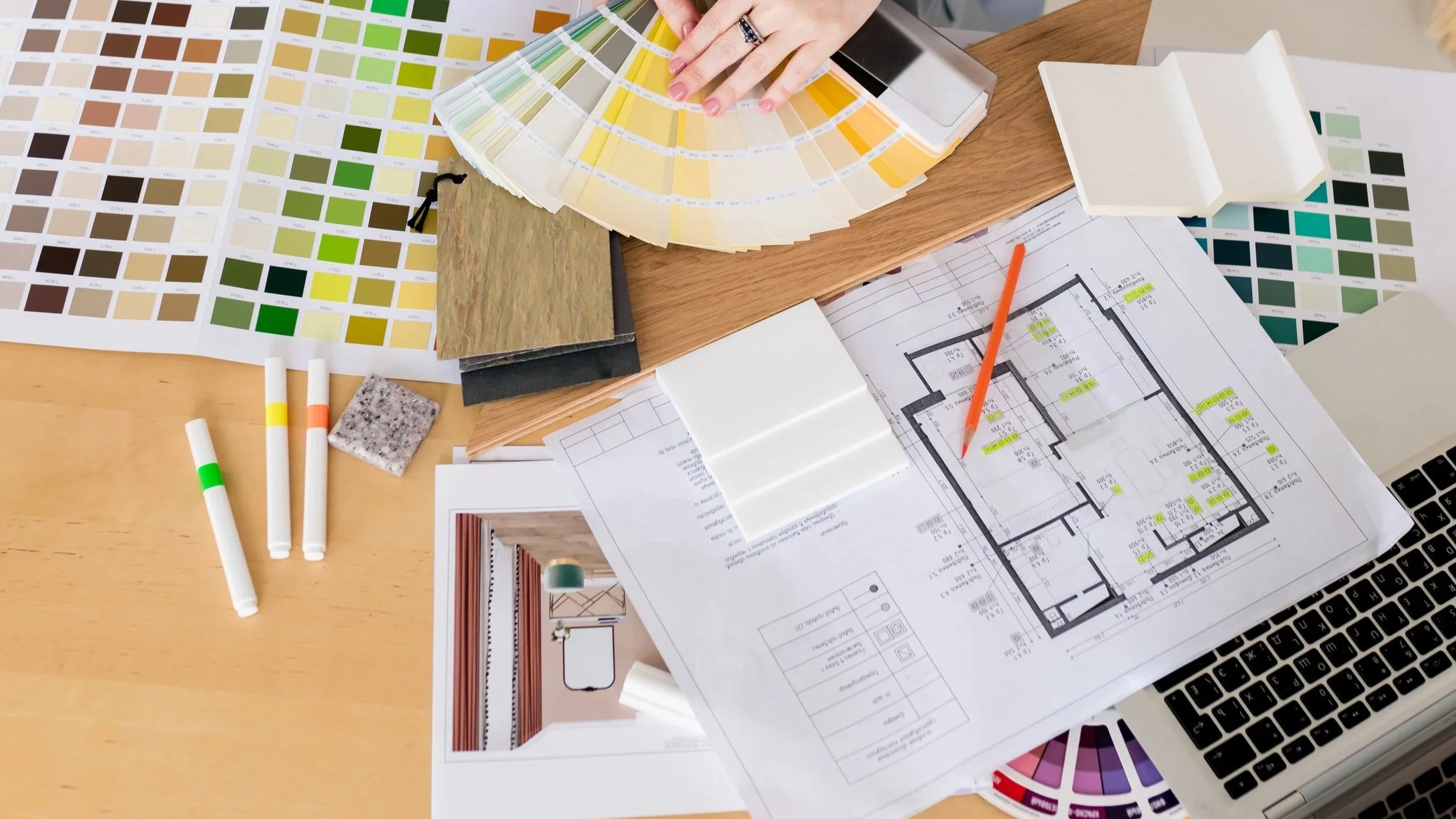
From the outside, it can look like nothing is happening—and then suddenly everything happens at once. In reality, interior decorators and designers work in intentional phases so they can listen deeply, solve problems, make thoughtful decisions, and keep projects from spiraling. In this post, I’m walking through why the process is phased, what’s really happening in each stage, and how trusting that rhythm leads to calmer, more beautiful spaces for those using them
Why “phases” aren’t just a formality
When you’re investing in design or decorating work, it’s natural to want to move quickly:
You’re excited to see change.
You may be living with a space that doesn’t feel quite right.
You’re aware of the budget and the calendar.
From that perspective, phases can feel like delays: “Why do we need all this discovery or concept work—can’t we just start ordering?”
But for interior decorators and designers, phases are:
A way to protect the project from rushed decisions.
A structure for making sure those using the space are truly heard.
A way to sequence hundreds of small decisions so they support each other instead of competing.
When you skip or compress phases, you don’t always notice the impact right away. It shows up later—when a pattern feels off-scale, a sofa doesn’t sit right in the room, or the budget is eaten up in the wrong places.
Trusting the process isn’t about giving up control. It’s about recognizing that there is a rhythm to how good spaces come together.
Phase 1: Discovery — listening beneath the surface
Discovery is where your decorator or designer learns the story of the space.
On the surface, this might look like:
Walkthroughs.
Conversations.
Questionnaires.
Gathering inspiration images.
Underneath, a lot more is happening. Your decorator or designer is:
Listening for how those using the space really live and work, not just the words they choose.
Noticing body language: where someone lights up, where they hesitate.
Mapping what must stay, what can go, and what can evolve—heirlooms, architecture, budget realities.
Understanding constraints: timelines, kids, pets, business needs, accessibility, storage, light.
If you’re in this phase, the most helpful things you can do are:
Be candid about how the space feels right now—even if it feels a little vulnerable.
Share what isn’t working as clearly as you can.
Talk about how you want the space to support your days, not just what you think it “should” look like.
Decorators and designers are not judging; they’re gathering information so they can advocate for those using the space.
Phase 2: Concept — shaping the “feeling” before the details
Once your decorator or designer understands the story, they move into concept work.
This can look like:
Mood boards.
Early color palettes.
Inspiration patterns and materials.
Rough sketches or spatial ideas.
Materials boards with fabrics, wallpapers and finishes.
The goal here is not to pick the exact lamp or approve a specific pillow. It’s to:
Align on the feeling of the space—calm, energetic, cocooning, bright, grounded.
Set the direction for pattern and color—soft botanicals, tailored geometrics, layered neutrals, and so on.
Confirm big-picture decisions: Are we leaning more classic or more modern? More minimal or more layered?
Why this phase matters:
If you jump straight into product selection, you risk choosing beautiful individual pieces that don’t belong to the same story.
Getting the concept right saves time later—fewer false starts, fewer “this just doesn’t feel like us” moments.
If you’re reacting to a concept presentation, focus on:
How you feel when you look at it.
Which elements feel most “you.”
Which ones feel like they’re heading in the wrong direction.
You don’t need the exact words; your honest reaction helps refine the direction.
Phase 3: Design development – the layers you can see and feel
Whether you are working with an interior decorator, an interior designer, or both, all three paths are valid; the right combination simply depends on what your space actually needs.
Very simply put:
An interior decorator focuses on what you see and feel once the walls are where they’re going to stay—color palettes, furniture, rugs, window coverings, art, styling, fabric, wallpaper, and the way pattern and texture move from room to room.
An interior designer typically leads when there are physical changes to the space itself—moving or removing walls, rethinking layouts, coordinating with architects and contractors, addressing code and clearances, planning installed lighting, plumbing locations, and built-in cabinetry. Many designers also carry the decorating work (furniture, color, textiles) once the construction side is resolved.
In my own practice, I sit firmly in the interior decorator + interiors artist + wallpaper and fabric pattern designer lane, with real-world interior design experience in my tool kit. I’ve done the construction-adjacent work; I simply choose to specialize now in:
The emotional and tactile experience of the space.
The cohesion between rooms that visually connect (kitchen → dining → living → patio, as one example).
The visual and sensory story told through wallpaper, fabric, furniture, soft goods, and styling.
If a project involves construction, structural changes, or complex built-ins, I’m an excellent collaborator alongside an interior designer who leads that portion. If construction isn’t needed—or has already been completed—an interior decorator may be all that’s required to bring the space fully to life.
This phase is where that collaboration really shows.
Translating plans into a lived experience
On the decorating and pattern side, this is where I:
Build out color palettes that feel coherent from room to room, especially across open sightlines.
Choose textiles (upholstery, drapery, bedding, pillows) that support how those using the space actually live—performance where needed, natural fibers where touch and breathability matter most.
Curate wallcoverings and custom patterns that belong to the architecture and the people, not just the trend cycle.
Look carefully at view lines: what you see from the kitchen sink, the front entry, the sofa, the bed, and how patterns and textures greet you from each of those vantage points.
On the designer side, this is typically where:
Floor plans and elevations turn into specific furniture layouts.
Architectural finishes are finalized—flooring, tile, countertop materials, cabinet style and stain, door and window hardware.
Hardwired lighting is confirmed and coordinated with the electrical plan.
My focus here is aesthetic, visual, and sensual—how the room feels to the eyes, the hands, and the nervous system—while keeping practical needs (durability, maintenance, use patterns) very much in the conversation.
When a decorator is enough—and when a team is better
If your home or business does not need walls moved, new windows cut, or major construction, starting with a decorator can be a very smart, efficient choice. You may already have good bones; you simply need:
Better furniture and layout.
Thoughtful color and pattern.
Window treatments that feel intentional instead of “tacked on.”
A clearer emotional throughline so the spaces finally feel like “you.”
In those scenarios, I’ll often:
Work with upholsterers, custom window covering workrooms, rug sources, and paint specialists.
Recommend freestanding lighting, furnishings, and casegoods as needed.
Provide professional resources such as wallpaper installers, cabinetry designers, and other specialists.
Help you use what you already love in a fresh, intentional way instead of wiping the slate clean.
For new builds and major renovations, it often makes sense to have both a decorator/pattern specialist and a designer at the table. A designer can stay deeply focused on:
Structure, code, and construction details.
Millwork (cabinetry, shelves, panels, etc.), plumbing, tile layouts, and hardwired lighting.
While I stay deeply focused on:
The interiors story—how you want the space to feel once everyone has gone home and you’re actually living or working there.
The wallpaper and fabric that will wrap those decisions in comfort, personality, and meaning.
The visual and tactile continuity from room to room, so nothing feels accidental.
It’s not about one profession replacing the other; it’s about each of us staying in the part of the process that truly lights us up— decorators like me in the artistic, aesthetic, and sensory layers, and designers in shaping the space itself—so the rooms can reflect the joy and intention those using the space want to feel every day.
Behind the scenes: why the sequence matters
While you’re seeing presentations, moodboards, materials boards, and revised plans in clear phases, your decorator and/or designer is usually working several steps ahead behind the scenes. Each role has its own focus, and often they’re progressing in parallel.
On the decorator / pattern side, it might look like:
Shifting a fabric choice because the original option won’t behave well in the actual light or use pattern of the room.
Rebalancing pattern, texture, and color so adjacent spaces still feel cohesive when one element changes.
Updating materials and styling details to support the revised plan without losing the emotional throughline.
On the designer side, that might look like:
Adjusting a furniture layout while also checking clearances, lead times, and potential backorders.
Tweaking a color palette because a specific stone, tile, or cabinet finish was discontinued.
Coordinating changes with trades so structural, electrical, and millwork decisions still work together.
Each decision touches the next. Changing one thing mid-stream often means rebalancing three or more others so the room still feels intentional and cohesive.
This is why it can feel tempting—but risky—to jump in mid-phase with something like:
“We found a different sofa online last night; can we just swap it in?”
“I bought this rug on sale—can you make it work?”
“I saw a new inspiration room on Pinterest; can we pivot to this instead?”
Sometimes those finds can be integrated beautifully. Often times, however, dropping them into the middle of Phase 3 means:
Reworking clearances, traffic paths, or proportions (designer).
Reconsidering fabrics, wall colors, and pattern scale (decorator/pattern work).
Repeating work that’s already been thoughtfully done on both sides.
Trusting the process here doesn’t mean you stop having opinions or excitement. It means you bring new ideas into the right moments—concept, early selections, or clearly defined review points—so your team can honor your vision and keep timelines, budgets, and trade schedules as intact as possible.
This is also why sign-off between phases matters so much. When you approve a design direction, a materials board, or a set of final selections, it gives your decorator and designer a clear green light to move into ordering, scheduling, and coordination. If supply-chain hiccups or color surprises happen on the professional side, it’s our responsibility to address them and keep the story—and schedule—as on track as much as we can.
If big changes come after those approvals, they’re still possible, but they usually require:
Re-scoping the work.
Adjusting timelines.
Adding fees to cover the extra professional time and coordination, plus any cost impacts of changing course midstream—things like:
rush or expedited shipping,
restocking or cancellation fees, and
sourcing new furniture, cabinetry, or materials whose pricing may have increased (sometimes significantly) since the original plan was made.
And all of this doesn’t just live on paper. Your decorator or designer is usually coordinating a small symphony of trades whose schedules are intertwined:
Painting and wall prep
Flooring installation or refinishing
Electrical work and hardwired lighting, and the placement thereof
Cabinetry and millwork installation
Wallpaper installation and wall prep
Upholstery, custom window coverings, and rugs
Furniture and lighting deliveries
Each trade relies on the one before it: floors before rugs, wall prep before paint and/or wallpaper, cabinets before final hardware, lighting rough-in before fixtures, wallpaper before final art placement. When a major element changes late—like a new sofa, a different rug, or a full shift in inspiration—it can ripple through that entire sequence and the budget.
Practically, that can mean:
New drawings or revisions for multiple trades.
Rebooking or delaying installers who were already scheduled.
Additional hours of work across your professional team.
Pushing out the date when you can comfortably move back into or fully use the space.
It isn’t about punishment; it’s about acknowledging the real effort, hours, and moving parts already in motion on your behalf. Everyone’s time, from trades to design professionals to those using the space, is valuable—and when it’s honored, the whole project feels better for everyone.
The more the sequence is respected, the more of your team’s energy can go into crafting a space that feels quietly right for those using it, instead of untangling avoidable detours.
Phase 4: Procurement — quiet, detailed work you don’t always see
This is the phase that often looks like “nothing is happening,” because so much happens behind the scenes.
Procurement can include:
Finalizing quotes.
Placing orders for wallpaper, fabrics, furnishings, and custom pieces.
Coordinating with workrooms, upholsterers, and professional wallpaper installers.
Tracking shipments, lead times, and potential delays.
Double-checking measurements, quantities, and specifications.
From the outside, you may see fewer visual changes. But your decorator or designer might be sending dozens of emails, making phone calls, solving small problems, and keeping the logistics moving for you.
This phase matters because:
It protects you from a lot of the stress of chasing orders and solving product issues.
It ensures that by the time installers and trades arrive, what they need is actually there.
It allows your decorator or designer to catch mistakes before they land in the space.
If you’re feeling impatient here, that’s completely human. It can help to:
Ask for a simple status summary once a week, rather than daily updates.
Remember that a lot of the work in this phase is intentionally invisible so your experience can stay calmer.
Phase 5: Installation & styling — when everything lands
This is the phase most people picture when they think “design”:
Wallpaper is installed.
Upholstered pieces and case goods arrive.
Rugs, lighting, and window treatments go in.
Styling happens—books, art, textiles, and objects.
It can be thrilling and a little disorienting at the same time. These days often look like:
Boxes everywhere.
Furniture shifting around to find exactly the right placement.
Your decorator or designer making small adjustments on the spot.
Two important truths:
The room will often look worse before it looks better.
The last 10–20% of styling makes an enormous difference.
If you walk in mid-install and feel nervous, that’s okay. Try to:
Let the process finish before making judgments.
Trust the eyes and instincts of the professional you hired.
Give yourself time to live with the room before requesting big changes.
Once the dust settles, small tweaks are completely normal. But they’re much easier to make when the full picture is in place.
A quick reality check about “reveal” shows
Many of us love watching design and makeover shows—full renovations, dream home transformations, even quicker decor refreshes. They’re fun for a reason. But there’s one important detail that often gets glossed over:
Those using the space are usually not there during Phases 3–5.
They don’t pop in during construction, wallpaper installation, or styling days.
They leave, the team does the work, and they return at the end for a reveal.
What you and I see on screen is the edited, finished story:
The chaos, dust, and boxes are already gone.
All the trades have been coordinated behind the scenes.
The furniture, art, and textiles have been fully placed before anyone reacts.
In real life, it’s very common for those using the space to still be nearby or even living in the home while all of this is happening. That naturally makes it tempting to:
Peek in mid-install and panic because it looks nothing like the final vision yet.
React to the temporary mess—tools, packaging, half-installed pieces.
Want to “fix” things before your decorator or designer has finished composing the room.
If you can, it helps to treat your own project a little more like a reveal show:
Give your team space on heavy install and styling days.
Avoid making big decisions based on a half-finished snapshot.
Let the room cross the finish line before you decide how you feel about it.
You’re not being asked to disappear; you’re being invited to give the process the same uninterrupted runway you see on television, so that when you step back into the space, you’re responding to the whole story—not to one unfinished chapter.
Why changing phases midstream can be so disruptive
Sometimes, without realizing it, those hiring a decorator or designer ask to collapse or reorder the phases:
Wanting to order everything during discovery.
Asking for “just one more round” of completely new options after design development is complete.
Making large changes during installation that belong back in concept.
It’s understandable—especially when you’re excited or nervous. But it can:
Affect timelines and budgets.
Create confusion about what’s actually been approved.
Lead to choices that don’t fully support each other.
A gentler approach is to pause and say: “I know we’re in [this] phase. I’m feeling [excited / nervous / unsure] about [this specific thing]. Is there room to adjust, or do we need to stay the course here?”
That kind of conversation respects the structure and your feelings, which is where the best solutions usually live.
If you’re an interiors professional: how this supports your work
If you’re an interior decorator or designer, you might be reading this thinking, “This is exactly what I wish more people understood.”
If this resonates with you, you can:
Link to or adapt this post as part of your onboarding.
Use the phase descriptions as a framework in your own client guides.
Borrow language like “those using the space” and “story of the space” to keep the focus where you want it.
My goal is to give you language that:
Honors your expertise.
Validates that your process has a purpose.
For those using the space: giving yourself permission to not hold everything
If you’re the one inviting a professional into your home or business, you are already doing something brave and generous: trusting someone with the places that hold your life.
You don’t need to manage every detail to be a good steward of that investment. In fact, it often goes better when you:
Share clearly what matters most to you.
Stay open and honest along the way.
Allow your decorator or designer to carry the technical details so you don’t have to.
Trusting the process doesn’t mean letting go of your voice. It means letting the professional you chose do the job you brought them in for—so you can step into a space that feels like you, without having to hold the entire project on your own.
If you’re an interiors professional and you’d like a pattern and decorating partner who understands what each phase is carrying, I’d be glad to collaborate—especially on wallpaper, fabric, and the aesthetic layers that bring the story of a space to life. Connect with me.
If you’re someone considering working with an interior decorator or designer, and this has helped clarify what to expect, you’re welcome to explore my work, read more process-focused posts on my Surface & Space blog, and reach out with questions. Better yet, subscribe to Surface & Space for new articles in your inbox and instant access to two free printable substrate guides (wallpaper & fabric), plus a bonus PDF on Conscious Creators of Gentle Textiles.
Together, we can create spaces that feel thoughtful, grounded, and calm—because the process that built them was, too.
© 2025-2026 Gabrielle Hewson. All rights reserved. You’re welcome to share links to this article, but please don’t copy or republish the text or images without my written permission. For licensing, permissions, or any other use beyond linking, please contact me directly.