Gentle Textiles: Humane Wool, Faux Fur, and Cozy Alternatives for Conscious Interiors
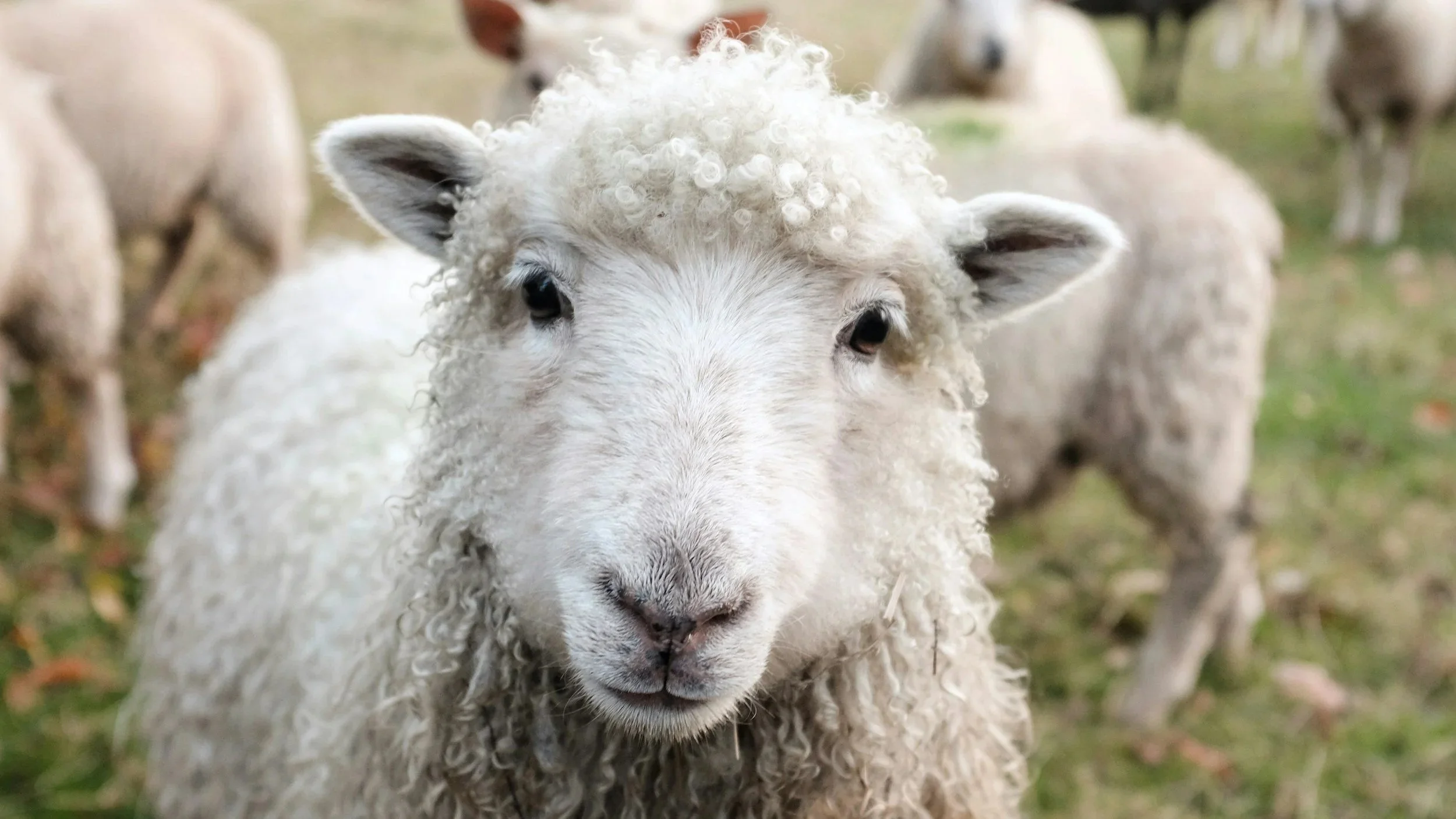
Cozy doesn’t have to come at the expense of your values. In this post, I’m walking through gentle ways to bring warmth and texture into a room—humane wool options, faux hides and faux fur, and plant-based “wool” alternatives—so those using the space can feel comfortable and aligned with what matters to them.
What Gentle, Low-Impact Textiles Can Look Like in Cozy Spaces
When people think about “ethical” or “sustainable” textiles, they often picture rooms that are a bit stark—lots of hard surfaces, crisp cotton, not much softness. But living in alignment with your values doesn’t require giving up warmth, plushness, or that feeling of being held by a space.
Design that takes ethics and impact seriously is less about perfection and more about prioritizing textiles and processes that:
Aim to avoid harm to all forms of sentient life and the earth, and let every design decision be a small step closer to that.
Make use of what already exists (rescue, reclaim, repurpose).
Keep those using the space comfortable, soothed, and supported.
In this article, we’ll look at:
More humane ways of approaching wool, and how molting vs. shearing fits into that conversation.
Faux hides, faux fur, and faux fleece that give you cozy texture without skins taken from other sentient beings.
Plant-based and recycled “wool-like” fabrics that provide softness without fibers taken from other sentient beings.
Alternatives to down, feathers, and scale- or skin-based materials, so warmth and texture don’t require harm to birds, reptiles, fish, or other sentient life.
You can mix and match. The point isn’t to be perfect; it’s to have more options, more nuance, and more ways to be kind in your choices.
Humane Wool: When Sentient-Derived Fibers Are Still on the Table
Some people prefer to avoid fibers taken from other sentient beings altogether, and that choice is valid. Others are comfortable with wool when it’s produced in ways that prioritize welfare and thoughtful land stewardship.
If wool is on the table for you or those you’re designing for, a helpful question becomes:
“How do we choose the gentlest version possible?”
Molting vs. Shearing — What’s Actually Happening?
In nature, wild sheep and many other beings shed their coats seasonally. That’s molting: the fiber loosens and falls away on its own, or can be gently brushed out.
With some primitive or heritage breeds, it’s possible to collect fleece during this natural molting process—either from shedding in the fields or through brushing—though the quantities are small and variable.
Other fiber-bearing beings, like some goats and rabbits, can also be gently groomed to collect naturally loosening undercoats.
Modern domesticated wool sheep are different:
Centuries of selective breeding mean most commercial breeds no longer shed enough on their own, and they grow far more wool than their wild counterparts.
As a result, shearing is necessary to keep them from overheating and to prevent matting and other health issues.
From a kinder-wool perspective, there’s a spectrum:
On one end, you have very small-scale flocks or sanctuary residents, where fleece is collected from natural molting and/or careful, unhurried shearing by skilled handlers. The fiber is almost a byproduct of care.
On the other end, you have high-volume, speed-driven operations where the focus is more on throughput than on the experience of those being shorn.
Most wool sits somewhere in between, which is why it’s helpful to ask more questions and look for signals of better care.
A note on other sentient-derived fibers
Although this article uses “wool” and sheep as a common example, the same ethical questions apply to other fibers taken from sentient beings—like alpaca, llama, cashmere, mohair, and angora. In my own work, I treat all of these as sentient-derived fibers and apply the same lens: avoid them where possible, and if they must be included, ask careful questions about welfare, traceability, and recycled content.
Certifications and Questions to Ask
If you want to stay with wool but raise the bar on welfare and land care, there are a couple of helpful frameworks:
Responsible Wool Standard (RWS) — A global, voluntary standard that addresses sheep welfare and land management from farm through the business-to-business supply chain.
ZQ Merino — A merino-focused standard that emphasizes welfare, environmental stewardship, and traceability, often including commitments like non-mulesed* flocks.
* Mulesing is a painful practice some sheep farms use on certain breeds. When I work with wool at all, I look for wool that is clearly labeled non-mulesed and comes from farms that commit to gentler care. If wool is part of a project, I look for sources that avoid known harmful practices and commit to higher welfare standards—in the wool industry, some of these practices are referred to as “mulesing,” and I specifically look for wool labeled as non-mulesed.
None of these certifications make wool “perfect,” but they do:
Screen out some of the harsher practices.
Require better documentation and oversight.
You can also simply ask:
Is this wool RWS-, ZQ-, or similarly certified, or is there clear information about the farms?
Is the wool from non-mulesed flocks?
Is any of it recycled or reclaimed?
Does the supplier share how those being shorn are treated during shearing and over their full lives?
The answers might confirm a good choice—or gently nudge you toward one of the many wool-free alternatives instead.
Rescue, Reclaimed, and “Inherited” Wool
One of the most thoughtful ways to include wool is to extend the life of what already exists rather than commission new production.
In interiors, that can look like:
Choosing vintage wool rugs, blankets, or throws from antique shops, family collections, or secondhand platforms and giving them a new chapter.
Specifying recycled wool fabrics, where yarns from pre- or post-consumer wool are re-spun and blended to create new yardage—often with a lower environmental footprint than virgin wool.
Working with very small farms or sanctuaries that offer limited amounts of fleece from beings they’re committed to caring for long-term, where fiber is truly a side benefit of lifelong care, not the sole reason those beings are there.
It’s not about rewriting history; it’s about choosing to honor materials already in circulation and slowing the demand for new extraction.
If Wool Has to Be Involved
My own North Star is to avoid harm to all forms of sentient life wherever possible. In some projects, those using the space still feel strongly about including wool. When that happens, I treat it as a “less harm, more honesty” conversation and look for:
Recycled wool first — Fabrics and rugs made from recycled wool keep existing fibers in circulation rather than drawing on fresh extraction.
Traceable, higher-welfare programs — If merino is involved, I look for programs like the Responsible Wool Standard (RWS) or ZQ that at least document where the fiber came from and how land and flocks are being managed.
Non-mulesed sourcing — For any sheep-derived wool, I look for clearly stated non-mulesed practices as a baseline, rather than leaving that question unasked.
Small, meaningful doses — Even then, I tend to use wool sparingly—on pieces that will be kept, cared for, and genuinely loved for many years.
None of this makes wool “perfect.” It simply means that if it is going to be part of a room, we’ve asked better questions, reduced harm where we can, and been honest about the trade-offs.
Faux Hides, Faux Fur, and Faux Fleece: Cozy Without Skins
For many people, the simplest line is: no skins, no pelts taken from other sentient beings. That doesn’t mean you have to give up the look or feel of softness and pile.
Faux Fur and Faux Shearling
Faux fur is a textile designed to mimic the look and feel of fur without using real pelts taken from other sentient beings. It’s usually made from synthetic fibers like polyester or acrylic, sometimes blended for a more natural hand.
The potential upsides:
No skins or pelts are taken from other sentient beings.
It’s widely available for throws, pillows, and occasional upholstery.
It can bring a sense of warmth and playfulness into a space when used thoughtfully.
There’s also growing interest in:
Recycled-content faux furs, where part of the fiber content is made from recycled plastics.
Bio-based faux furs, which experiment with plant-derived components to reduce reliance on fossil fuels.
It’s honest to acknowledge that synthetic textiles come with their own environmental questions, especially around microfibers and end-of-life. That’s why I like to think of faux fur and faux shearling as accent materials:
A small ottoman in a vegan faux sherpa.
A pair of faux-fur pillows that stay on a favorite reading chair for years.
One well-loved throw at the end of a bed.
The idea is to choose well, care well, and keep it long, so each piece earns its place.
Practical Tips When Specifying Faux Fur / Faux Fleece
A few gentle guidelines for designers and those using the space:
Prioritize higher-quality faux furs and sherpas that feel good in the hand and resist matting, so they age gracefully instead of feeling “fast fashion.”
Look for recycled content or makers who share more about their supply chain.
Reserve them for smaller, high-impact areas—pillows, blankets, benches, small-scale upholstery—rather than floor-to-ceiling applications.
When washing removable covers, consider using a microfiber-catching laundry bag or filter to reduce fibers entering waterways.
None of this needs to be perfect. Even small, informed steps can make a difference over the life of the fabric.
Vegan “Wool,” Plant-Based Cozy Textiles, and Feather-Free Warmth
If you or those using the space prefer to skip fibers taken from other sentient beings completely, there is a growing world of plant-based and recycled “wool-like” fabrics that can be incredibly soft and cozy.
Some examples:
Brushed organic cotton flannels and twills that offer wool-like warmth without fibers taken from other sentient beings.
Bamboo, Tencel/Lyocell, and Modal blends that can feel silky yet substantial, often used in throws, blankets, and upholstery blends.
Hemp and linen blends that start a bit crisp but soften beautifully with use, especially in looser or boucle-like weaves.
Newer plant-based “vegan wool” innovations, where fibers like cotton or other plant materials are engineered to mimic wool’s loft and hand without involving other sentient beings.
That same mindset can extend to down, feathers, and skins as well:
Opting for down-alternative fills in pillows and duvets instead of feathers from birds.
Choosing plant-based or recycled alternatives for any leather- or scale-look applications so reptiles, fish, and other beings aren’t part of the supply chain.
In a room, you might combine:
A plant-based boucle or chenille on a key sofa or chair.
A stack of brushed cotton or Tencel throws for curl-up moments.
Natural-fiber, wool-free rugs that still bring warmth, texture, and grounding to the floor.
When you pair this kind of texture with carefully chosen pattern—on wallpaper, pillows, or upholstery—the result can feel rich and layered without relying on sentient-derived fibers at all.
Bringing Gentler Textiles Into Real Projects
Whether you’re an interiors professional or someone investing in your own space, it helps to approach this as a layering exercise.
First layer: values
Is this a fully sentient-fiber-free project?
Is there room for carefully sourced wool in small ways?
Are rescue, reclaimed, or long-lived pieces part of the story?
Second layer: function
Where does the fabric need to be the most durable—dining chairs, family sofas, mudroom benches?
Where can you be a bit more delicate—bedroom pillows, occasional blankets, cozy corners?
Third layer: story
How do you want those using the space to feel—held, grounded, playful, expansive?
Are we creating a retreat, a gathering place, an energizing studio?
A few conversation starters you can bring to your designer, decorator, or upholsterer:
“I’d love to prioritize textiles that are gentle on all forms of sentient life and the environment—can we start with plant-based and recycled options?”
“If we include any wool or other sentient-derived fibers, can we focus on recycled or certified versions and use them where they have the most impact?”
“I love the look of fur, shearling, and down, but I’d like to achieve that with vegan or low-impact alternatives—what do you recommend?”
These questions don’t assume a perfect solution. They simply invite everyone on the project to move in a kinder direction, one choice at a time.
How I Approach This in My Own Work
As a wallpaper & fabric pattern designer and interior decorator, I’m always balancing aesthetics, function, and the quieter ethical questions that live underneath our material choices.
In practice, that looks like:
Leaning into plant-based and performance fabrics for everyday upholstery and soft goods.
Using faux fur, faux fleece, and high-texture solids in small, considered ways when those using the space want that sense of softness and indulgence.
Incorporating rescued, reclaimed, or heirloom pieces wherever they make sense—especially rugs and blankets with history.
Being transparent about fiber content and what each choice means for care, longevity, and impact.
I don’t believe in one-size-fits-all answers. I do believe that more awareness and more options give us room to design spaces that feel good in every sense—for those living in them, and for other sentient beings who share this world with us.
If you’re an interior designer or decorator who wants a pattern and decorating partner who thinks about comfort, ethics, and aesthetics together, I’d be glad to talk about collaborating on upcoming projects.
If you’re reading this as someone using the space—residential or commercial—and you’d like help choosing wallpaper, fabric, and soft furnishings that feel aligned with your values and your everyday routines, you can reach out to start a conversation.
You can also subscribe to Surface & Space on my website for more pattern-forward, materials-conscious design stories — as well as gain access to special downloads about wallpaper & fabric substrates, including a bonus pdf about some conscious creators of gentle textiles.
© 2025-2026 Gabrielle Hewson. All rights reserved. You’re welcome to share links to this article, but please don’t copy or republish the text or images without my written permission. For licensing, permissions, or any other use beyond linking, please contact me directly.