Bouclé, Chenille & Nubby Weaves: Cozy Textured Solids That Still Feel Refined When Mixed with Custom Patterns
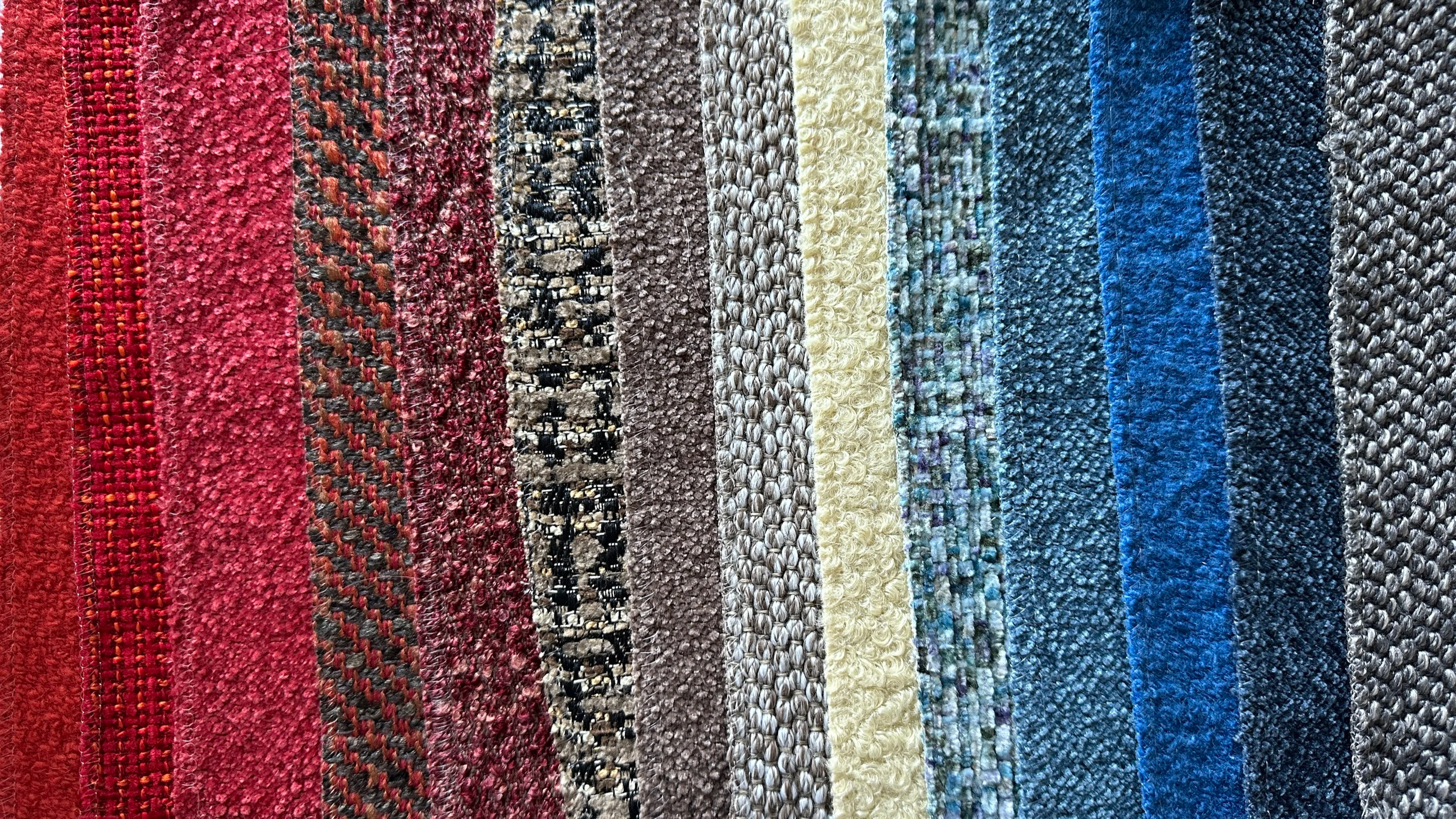
Textured solids—like bouclé (boo-CLAY), chenille (shuh-NEEL), and nubby weaves—are some of the hardest-working fabrics in a patterned space. They bring warmth, softness, and depth without competing with custom wallpaper or printed textiles. When chosen well, they feel cozy and inviting and polished enough to sit next to a beautifully designed pattern. In this post, I’m sharing what sets these textures apart, how to use them in upholstery, and how to mix them with custom patterns in a way that feels intentional, not chaotic.
Why textured solids belong in pattern-rich spaces
When there’s custom wallpaper, patterned pillows, or printed drapery in a room, the eye needs places to rest. That’s where textured solids come in.
Bouclé, chenille, and nubby weaves:
Add visual interest without adding more print.
Make neutrals feel intentional, not like an afterthought.
Soften the transition between bold patterns and harder surfaces (wood, stone, metal).
For those using the space, that translates into rooms that feel:
layered but not busy,
cozy but not sloppy,
and grounded even when the pattern story is expressive.
What bouclé, chenille, and nubby weaves actually are
The names can feel interchangeable, but each texture has its own personality.
Bouclé
Look & feel:
Looping, curly yarns that create a soft, pebbled surface.
Feels plush and cozy, often in creamy or soft neutral tones.
Mood: Warm, cocooning, slightly cloud-like.
Best uses: Sofas and chairs in living rooms or bedrooms where softness is a priority.
Chenille
Look & feel:
Velvety, caterpillar-like yarns that create a smooth but plush surface.
Can feel slightly more tailored than bouclé, depending on the weave.
Mood: Soft, comfortable, approachable—like a favorite sweater.
Best uses: Chairs, ottomans, and sofas that need to feel cozy but not overly casual.
Nubby weaves
Look & feel:
Varied yarn thickness in a tight weave, creating small highs and lows.
Can read as rustic or refined depending on color and fiber.
Mood: Textural, grounded, a little earthy.
Best uses: Benches, accent chairs, and places where a bit of ruggedness is welcome.
All three give solids personality, which is especially important when pattern is doing a lot of the talking elsewhere in the room.
How to keep textured solids feeling refined, not messy
Textured fabrics can veer into “too casual” if a few details aren’t considered. To keep them feeling refined:
1. Pay attention to tailoring
Choose clean silhouettes for heavily textured fabrics—simple arms, tight backs, and edited details.
Let the texture be the star, not a mix of ornate shapes and busy seams.
2. Keep the palette thoughtful
Start with controlled color: creams, warm greys, mushroom, oat, soft camel.
Add deeper hues in measured ways (a deep moss chenille chair, a charcoal nubby bench) rather than making everything high contrast.
3. Vary texture, not chaos
Mix different textures in similar tones so they relate.
Example: a warm off-white bouclé sofa, a slightly darker beige chenille chair, and a taupe nubby ottoman. Same family, different feel.
Refinement often comes from repetition and restraint—using a small family of textures with intention rather than grabbing every cozy fabric at once.
Mixing textured solids with custom patterns
Custom wallpaper and patterns on fabric have their own rhythm and story. Textured solids are there to support that story.
A helpful way to think about it:
Let pattern carry imagery and motif (florals, geometrics, botanicals).
Let texture carry comfort and depth on the larger upholstered pieces.
A simple pattern-to-texture “recipe”
For a room with a custom pattern story (wallpaper or fabric), try:
1–2 patterned heroes — Wallpaper, drapery, or a pair of chairs in a custom print.
2–3 textured solids —
Sofa in bouclé or chenille.
Ottoman or bench in a nubby weave.
Occasional chair in a quieter, textured base cloth.
Small doses of pattern again on pillows or a single accent piece, echoing the main motif.
This keeps the room from feeling flat while making sure the custom pattern isn’t competing with large-scale print on every surface.
When I’m working with a patterned wallpaper or fabric as the “lead,” I almost always reach for solid textiles with noticeable weave or pile. The goal isn’t to add more pattern, but to let texture carry some of the interest. I’ll echo the main color from the pattern in one solid, then use another to elevate a quieter background color that might otherwise go unnoticed. On a sofa, bench, or pillow, those textured solids help the room feel grounded and touchable, while still clearly belonging to the same color story as the pattern.
Practical considerations: wear, pilling, and maintenance
Textured fabrics are inviting, but they come with their own practical questions. A few realities to keep in mind:
Pilling and fuzzing
Some bouclés and chenilles can pill over time, especially in heavy-use spots.
Higher-quality constructions and performance finishes can minimize this, but it’s worth asking about when choosing fabrics.
Snagging
Very open weaves can catch on jewelry, pet claws, or rough clothing.
In households with pets or young kids, tighter weaves with texture built into the structure are often a better bet.
Cleaning
Textured surfaces can hide small marks, but crumbs and pet hair may cling more.
Regular vacuuming and gentle brushing go a long way.
For the pieces those using the space rely on every day (family sofas, TV chairs, banquettes), pairing texture with performance properties can make the fabrics both beautiful and realistic.
For interior professionals: presenting cozy textures alongside custom pattern
If you’re an interior designer or decorator, textured solids can help those hiring you embrace custom pattern without feeling overwhelmed. A few strategies:
Build a fabric board with the custom pattern at the center and textured solids radiating out in a calm, related palette.
Describe textures in feeling words: “This feels like your favorite sweater,” “This one is more tailored,” “This one is really forgiving for everyday use.”
Explain your reasoning:
“We’re keeping the sofa in a textured solid so your custom wallpaper can really shine.”
“This nubby weave will keep the bench from feeling too formal in an otherwise elegant room.”
When people can touch these textures and see how they support the pattern, the whole scheme feels more grounded and less theoretical.
For those using the space: when these fabrics are a good fit
If you’re considering bouclé, chenille, or nubby weaves in your own home or business, it might be helpful to ask:
Do you want your main seating areas to feel cozy and relaxed rather than sharp and sleek?
Are you planning to bring in pattern on walls, pillows, or drapery, and want your larger pieces to feel calm but not boring?
Do you love neutrals but want them to feel interesting and layered, not flat?
If the answer to any of these is yes, textured solids may be a strong starting point—especially when paired with a custom pattern that carries more of the visual story.
If you’re dreaming about custom wallpaper or patterned textiles but worry your rooms will feel too busy, textured solids can be your best ally. Bouclé, chenille, and nubby weaves let you keep things cozy, layered, and livable while still giving your patterns room to shine.
If you’re an interior designer and want a textile-focused partner to support your pattern-rich projects, I’d love to collaborate on wallpaper, fabric, and the soft layers that carry the story of a space.
If you’re reading this as someone planning a new space—or reimagining an existing home or business—and you’d like help building a fabric and wallpaper story that balances texture, pattern, and practicality for those using the space, you’re welcome to reach out through my Contact Me page to learn more about my paid interior decorating services.
And if this kind of conversation is helpful, you can also:
Subscribe to Surface & Space to have new posts land in your inbox on Fridays.
Get access to a growing library of subscriber-only resources—gentle guides, checklists, and tools to help you think through pattern, color, and materials in your own time. I add to this collection regularly, so it becomes a little toolbox you can return to whenever you’re ready.
© 2025-2026 Gabrielle Hewson. All rights reserved. You’re welcome to share links to this article, but please don’t copy or republish the text or images without my written permission. For licensing, permissions, or any other use beyond linking, please contact me directly.