The Easiest Spaces to Transform With Wallpaper
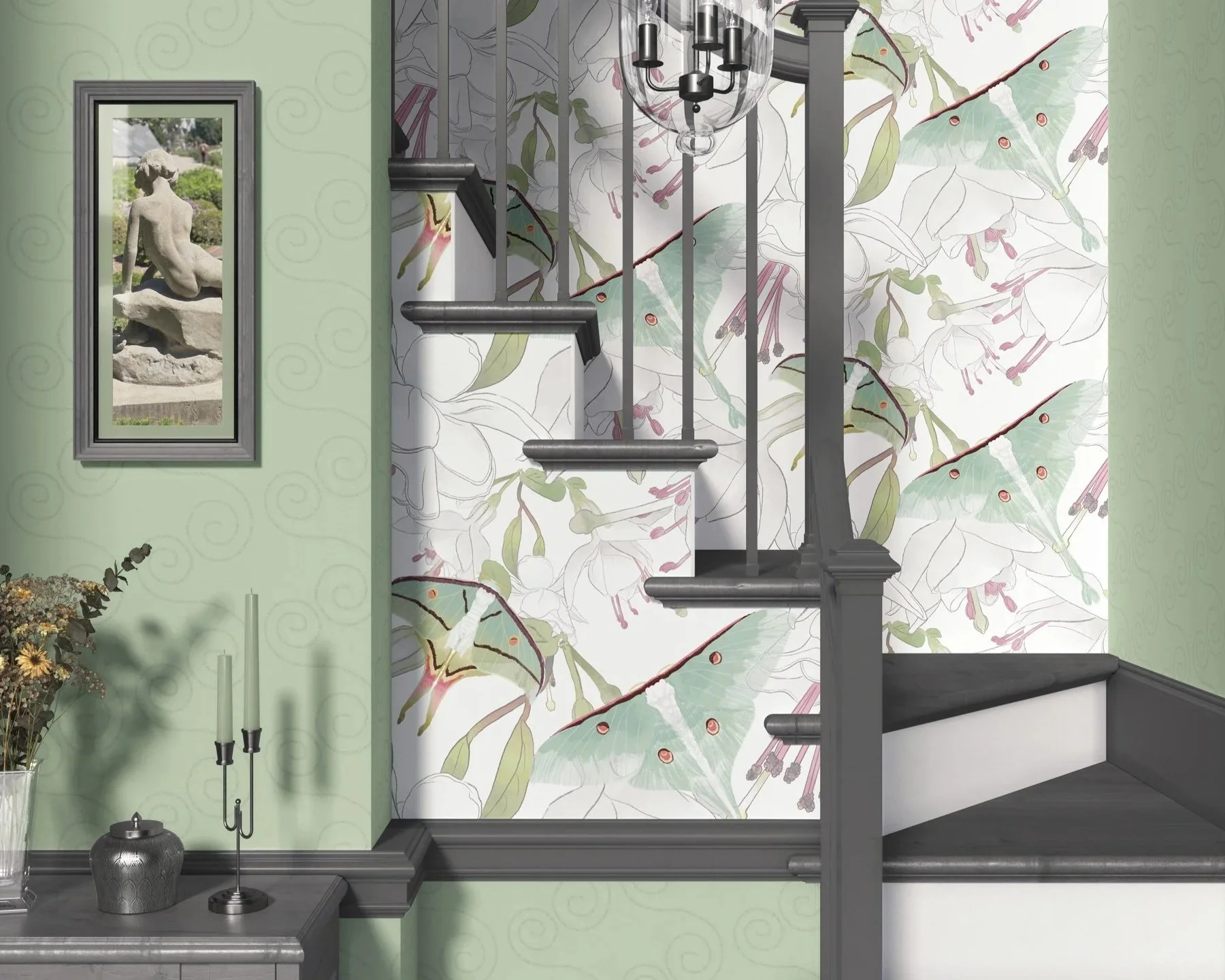
When many think of wallpaper, they often imagine committing to an entire house or a huge feature wall. But some of the most impactful transformations happen in the smallest, most overlooked corners. A single well-chosen pattern can turn an ordinary nook, hallway, or powder room into the most memorable space in the house. In this post, I’m sharing the easiest spaces to transform with wallpaper—and how to choose patterns that make them feel intentional, not overwhelming.
It’s like a tatoo — few rarely get just one; but, balance over visual cacophony is key to synergy.
Why small, focused spaces give the biggest “wow”
Wallpaper doesn’t have to mean wrapping every room. In fact, starting with smaller or more contained areas often delivers the greatest emotional impact for the least disruption.
These spaces are ideal because they’re:
Visually contained – one or two main walls, clear boundaries, simple trim.
Used frequently – they are seen multiple times a day, even without lingering.
Emotionally powerful – they shape how one arrives, gets ready, or welcomes guests.
I like to ask: “Where could wallpaper create the biggest mood shift with the smallest footprint?” That’s where the transformation magic usually lives.
Entries and foyers: your “first impression” canvas
The entry is often the first and last space we and our guests experience—and yet it’s one of the most under-designed zones in a home. A single pattern can completely reframe it.
Why entries are so easy to transform:
They’re typically working with a compact footprint: one main wall, a stair wall, or a small vestibule.
No need to have to change the furniture; a console, bench, or hooks suddenly feel intentional against a patterned backdrop.
High emotional payoff: every arrival feels more “composed.”
Pattern ideas:
Soft, welcoming botanicals for a “come in and exhale” feeling.
Stripes or gentle geometrics to emphasize height or guide the eye up a staircase.
A slightly bolder motif if the rest of the home is quiet—this becomes the home’s visual handshake.
For businesses or studio spaces, an entry pattern can also signal identity immediately: “This is what we’re about.”
Powder rooms: the smallest room with the biggest personality
If there’s one room made for wallpaper, it’s the powder room. Small, self-contained, and seen by almost every guest, it’s the ideal place to lead with pattern.
Why powder rooms and water closets are such low-risk, high-reward spaces:
You’re only in them for a few minutes at a time—so they can handle more drama.
Wall area is limited; one pattern can reach all surfaces without feeling like too much.
Plumbing, flooring, and vanity can stay relatively simple; wallpaper does the storytelling.
Pattern ideas:
A confident, mid- to large-scale motif in a tonal palette for “jewel box” sophistication.
A whimsical or narrative print that tells a little story—perfect for those who want to experiment with personality.
Metallic or slightly reflective substrates to make a small room glow under evening light.
If anyone is hesitant about wallpaper anywhere else, the powder room is usually the easiest place to make them into believers. I personally love putting wows in powders; inviting smiles of pleasure and/or humorous entertainment.
Breakfast nooks and small dining corners
These are the everyday gathering spots that quietly set the tone for mornings and casual meals—and they’re usually defined by one or two walls and a banquette or table.
Why they’re easy to transform:
There’s a built-in focal point: the table or bench. Wallpaper just frames it.
You can often get away with papering a single back wall and leaving adjacent walls painted.
The scale is forgiving—small spaces feel more intentional, not smaller, with the right pattern.
Pattern ideas:
Soft, rhythmic repeats that feel calm and cozy for mornings.
Patterns that tie in with kitchen finishes—echoing stone veining, cabinet color, or hardware tones.
Subtle botanicals or micro-geometrics that read as texture from a distance but reveal detail up close.
A breakfast nook wall is one of the easiest places to introduce one of your hero patterns in a very livable way.
Behind beds and headboards: instant “finished room”
Bedrooms are full of soft surfaces already, which makes them ideal for pattern—but you don’t have to wrap the whole room to feel a big difference.
Why the wall behind the bed is such a strategic canvas:
It’s the natural focal point when you walk into the room.
Often, you’re dealing with a single wall—straightforward measurements and install.
You can keep bedding simple and let the wallpaper do the heavy lifting.
Pattern ideas:
Gentle, enveloping patterns that support rest: flowing botanicals, soft geometrics, or tonal repeats.
Patterns that echo the curve or height of the headboard—for example, an arching motif with an arched headboard.
A pattern that picks up on accent colors you want to use in cushions, throws, or a bench.
For guest rooms, a wallpapered headboard wall is also an easy way to make the space feel like a welcoming hug or a boutique stay rather than a leftover room.
Backs of bookcases, cabinets, and niches
Sometimes the easiest move is not a full wall at all—it’s the in-between surfaces that quietly frame objects and collections.
Why these micro-spaces are impactful:
They require very little material—perfect for using leftovers or a special pattern in a small quantity.
They highlight what’s on the shelf: books, ceramics, art, glassware.
They add depth and personality to otherwise standard built-ins.
Pattern ideas:
Small to mid-scale prints that read as a textured backdrop behind objects.
Patterns that subtly echo another motif in the room (a stripe from the drapery, a leaf from the rug).
Tonal prints that provide interest without competing with colorful books or accessories.
These are also excellent places to introduce pattern in brand or studio spaces—behind displays, inspiration shelves, or library shelving.
Hallways, stair landings, and transition zones
These spaces with an intentional wallpaper pattern, colorway, and substrate can turn from “in-between” to “experience.”
Why transitional spaces are easy to upgrade:
They often have long, uninterrupted walls that are perfect for pattern.
You don’t have to change any furniture—just the envelope.
They set the rhythm for moving from one room to the next.
Pattern ideas:
Stripes or linear geometrics that emphasize direction and movement (up the stairs, down the hall).
Soft, repeating motifs that bridge color stories between adjoining rooms.
Patterns in mid-depth tones so scuffs and hand marks are less noticeable.
Even a single stair wall or upstairs landing wrapped in pattern can completely change how the entire circulation path feels.
Ceilings in small spaces: a surprise layer of polish
For the more adventurous, a small, patterned ceiling can deliver outsized impact while leaving the walls simple.
Easiest ceiling candidates:
Compact powder rooms
Small entries or vestibules
Cozy reading corners or bay windows
Why they’re surprisingly approachable:
A small plane—visually contained by trim or beams.
No rethinking the room layout.
The effect feels luxurious and custom, even when the rest of the room is very simple.
Pattern ideas:
Mid-scale, all-over patterns that look good from below and every angle.
Softer contrast so the ceiling feels like a gentle wash of pattern rather than a loud statement.
Metallic or pearlescent inks for a subtle glow in evening light.
It’s often easiest to start with a patterned ceiling in a smaller space to understand the appeal immediately.
Choosing an “easy” wallpaper space
Starting with these easier spaces can lower the pressure and lead to thoughtful, strategic choices.
Consider:
Where is more personality desired? — Entry, powder, breakfast nook, hallway—listen for any mention of small spaces.
Which room feels the most unfinished? — Often, it’s a room where furniture is fine but the surrounding walls (the envelope) feels flat. That’s a wallpaper opportunity.
Where would a little moment of joy or surprise elevate the space? —That answer often points directly to powder rooms, landings, or reading corners.
Connecting with a few wallpaper pattern samples in any of the substrates being considered by taping them to the walls where they will live and letting all who will be using the space live with these samples in place for a couple of days in both natural and artificial light will do wonders in helping inform the wallpaper pattern and substrate choice.
If you’re curious about wallpaper but not ready to commit to full-house coverage, starting with one of these “easy” spaces can be a beautiful way to dip a toe in. Whether you’re dreaming about a dramatic powder room, a more welcoming entry, or a breakfast nook that actually feels like your favorite part of the day, I’d love to help you choose the right pattern and placement. You can reach out to me to start the conversation.
Ready to experiment? You can request samples directly from any collection page by clicking “Request A Sample” on my website, and we’ll explore which spaces in your home or studio are primed for the biggest transformation. Check out my collections.
Subscribe to Surface & Space for new articles in your inbox and instant access to two free printable substrate guides (wallpaper & fabric), plus a bonus PDF on Conscious Creators of Gentle Textiles.
© 2025-2026 Gabrielle Hewson. All rights reserved. You’re welcome to share links to this article, but please don’t copy or republish the text or images without my written permission. For licensing, permissions, or any other use beyond linking, please contact me directly.