The Poetry of Pattern: How Repetition Creates Rhythm, Comfort, and a Sense of Belonging
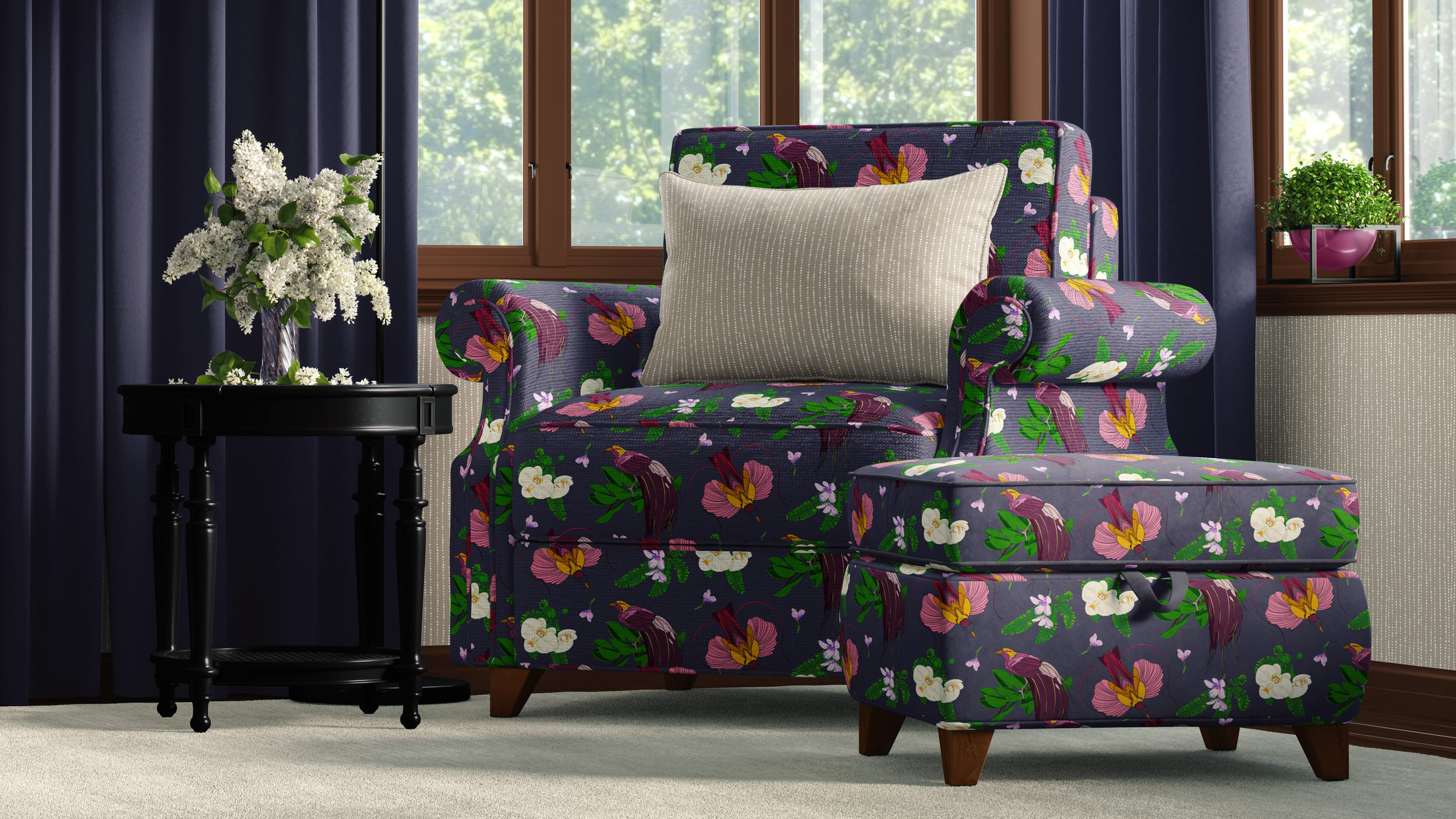
Good pattern feels a little like poetry: it has rhythm, repetition, and phrases that echo just enough to feel familiar. In interiors, that repetition does something powerful—it invites people to relax, to recognize the room, and to feel a sense of “this is my place.” In this post, I’m exploring how thoughtful pattern repetition can create rhythm, comfort, and a genuine sense of belonging in both homes and work spaces.
Why our brains respond so deeply to repeated pattern
We are pattern-seeking creatures. Long before we were designing rooms, our brains were scanning for repeated shapes, sounds, and rhythms—footsteps, waves, birdsong, the way light filters through trees. Repetition tells us, “This keeps happening. It’s safe. You can recognize this.”
In an interior, a repeating motif quietly gives us:
Rhythm – a sense of visual beat or cadence across a surface.
Predictability – we know what’s coming next, so the eye can rest.
Recognition – each time we see the motif again, it feels a little more familiar.
That’s why certain spaces feel instantly comforting, even if we can’t articulate why. The pattern isn’t shouting for attention—it’s holding the room together like a steady, quiet line of verse in the background.
Rhythm on the walls: how repetition shapes the feel of a room
When pattern repeats across a wall or ceiling, it does more than add “interest.” It sets the tempo of the room.
Slow, spacious repeats — Patterns with generous breathing room between motifs feel calm, open, and a bit meditative. They’re wonderful for bedrooms, reading corners, and living spaces where you want time to feel slower.
Steady, mid-scale rhythm — Mid-scale, evenly spaced repeats feel grounded and reassuring—like a steady heartbeat. They work beautifully in everyday rooms: kitchens, family spaces, entries.
Livelier, tighter rhythms — Smaller, more frequent repeats can create a sense of energy and liveliness, especially in smaller areas like powder rooms, playrooms, or creative studios. In the right palette, they feel playful rather than frantic.
Choosing a pattern, is both choosing a look and choosing a tempo. The rhythm of the repeat becomes the rhythm of how people experience the room.
Comfort through familiarity: when pattern becomes “home”
One of the reasons we fall in love with patterned spaces is that we start to associate those motifs with specific feelings and rituals. Over time:
A breakfast nook pattern becomes “the morning pattern.” That wallpaper or fabric is what you see every day with coffee. Your nervous system starts to link the repeat with waking up, starting slowly, or talking with the people you love.
A bedroom pattern becomes “the end-of-day pattern.” The print behind your bed, or on your shams and quilt, is what you see as you exhale at night. Its repetition becomes part of how you shift from doing to resting.
A hallway or entry pattern becomes “the coming home pattern.” Even a subtle repeat in an entry or corridor can act like a welcome refrain. You see it when you come in, hang your bag, and transition out of the outside world.
This is where pattern moves beyond aesthetics. It becomes a visual shorthand for daily comfort—a cue that we are back in a place that knows us.
Repetition and belonging: linking rooms through shared motifs
Belonging in a home isn’t just about one beautiful room; it’s about the way the whole space lives cohesively. Pattern repetition is one of the most elegant ways to create that feeling.
For example:
Carry a single motif through multiple rooms — Maybe a botanical from the dining room wallpaper reappears in a smaller scale on a cushion in the living room, and again as a subtle, coordinating fabric on a bedroom bench. The home starts to feel like one continuous sentence instead of separate paragraphs.
Repeat a stripe or geometric as a “through-line” — A stripe on a stair runner, a striped cushion in the mudroom, a subtle stripe in a bedroom fabric—suddenly the house has a shared rhythm, even if the colors and moods shift.
Echo shapes rather than exact patterns — If the wallpaper has softly rounded leaves, you might bring in curved lamp bases, arched mirrors, and rounded upholstery details. The repetition of shape creates a sense of belonging even when the patterns themselves vary.
These repetitions tell everyone walking through a house or business: “You’re still in the same story. You belong from room to room.”
The poetry of pattern in business and studio spaces
Belonging isn’t only for private homes. Studios, boutiques, and work spaces can use pattern in very similar ways to build connection.
Maybe it’s a signature motif in the entry wallpaper, on a bench cushion in the consultation area, and subtly on packaging or printed materials. That repeated motif becomes part of your brand’s “poem”—something clients recognize and feel anchored by.
A patterned wall for meetings, another for sample viewing, another for quiet solo work. Repetition within each zone of a business space (motif, color, fabric) makes it easy for people to understand how they should feel and behave in that space.
A small patterned coffee corner, or a patterned wall where meet & greets take place—these repeated experiences build emotional memory and a sense of community tied to those motifs.
When pattern is consistent with your values and used thoughtfully across touchpoints, it becomes a kind of visual language that visitors and team members learn to speak.
Designing pattern like a poem: repetition, variation, and refrain
Poetry relies on repetition—but it also relies on variation and refrain. The same is true with pattern in interiors. Too much sameness becomes monotony; too much variation feels chaotic. The sweet spot is in the balance.
I think of it like this:
Repetition = the recurring line — A favorite pattern or motif that shows up in more than one place—on a wall here, a cushion there, a shade somewhere else. This is your refrain.
Variation = the slight shift in each stanza — Maybe you change the scale, adjust the color, or use the same motif in a new context (wallpaper in one room, fabric in another). The story stays connected but keeps moving.
Quiet lines between the verses — Solid, textured surfaces—plain plaster, linen upholstery, a simple rug—act like white space on a page. They give the eye a rest so the repeated patterns can stand out and feel intentional.
Approached this way, a pattern collection in a home or business space feels less like a random assortment and more like a piece of writing: thoughtful, edited, and full of rhythm.
Using pattern to help others feel “seen” in their own spaces
Belonging also has a personal dimension: feeling like a room actually recognizes you. Pattern can help with that, especially when it reflects meaningful parts of someone’s story.
For example:
Botanicals inspired by a region or garden they love — Those who identify with a particular landscape—coastal grasses, desert plants, English gardens—often feel an instant sense of “this feels like me” when those shapes repeat around them.
Motifs with quiet cultural or personal references — A pattern that nods to heritage, travels, or favorite places can create a powerful sense of being at home. The repeat makes that reference feel woven into daily life rather than tacked on.
Patterns that match energy — Some feel most themselves in gentle, slow environments; others feel best in spaces with a bit of buzz. Matching the rhythm of the pattern to their natural pace is a subtle way of saying, “This space was designed with you in mind.”
When a visitor to a business recognizes themselves in the repeated motifs around them, it does more than please their eye. It reassures them that they belong here, in this exact life, with these exact surroundings.
Practical ways I like to bring “poetry” into a pattern plan
Choosing one “poem” per home or business — That doesn’t mean one pattern, but one overarching feeling: calm, lyrical, graphic, joyful, moody. Let that feeling guide all pattern choices, so the rhythm stays consistent.
Identifying refrains — Deciding which motifs, colors, or shapes to be repeated from room to room and use them in at least three places so they read as intentional, not accidental.
Minding the white space — Balance patterned walls with simpler upholstery, or patterned textiles with quieter walls gives the “poem” room to breathe.
Attaching patterns to rituals — Talking about patterns in relation to routines: “This is the pattern you’ll see every morning with coffee,” or “This repeat will be the backdrop for guests when they arrive.” It anchors the design in lived experience.
If you’re craving spaces that feel less like sets of rooms and more like a story you actually belong in, pattern is one of the most powerful tools we can use. Whether you’re interested in full-service decorating, introducing wallpaper and textiles into a few key areas, or exploring custom patterns that feel like your personal “poetry,” you can reach out to me to start the conversation.
Curious how my patterns might help create rhythm, comfort, and belonging in your own spaces? You can request samples directly from any collection page by clicking “Request A Sample” on my website. Check out my collections.
Subscribe to Surface & Space for new articles in your inbox and instant access to two free printable substrate guides (wallpaper & fabric), plus a bonus PDF on Conscious Creators of Gentle Textiles.
© 2025-2026 Gabrielle Hewson. All rights reserved. You’re welcome to share links to this article, but please don’t copy or republish the text or images without my written permission. For licensing, permissions, or any other use beyond linking, please contact me directly.